


Choosing between term vs permanent life insurance is one of the most consequential financial decisions you will make for your family’s future, yet industry jargon often turns the process into a guessing game. Pick the wrong type of policy, and you could end up drastically underinsured when it matters most, or locked into premiums you can no longer afford.
This guide breaks down the core differences between term and permanent life insurance, weighs the pros and cons of each, compares real-world costs, and walks you through a step-by-step framework for choosing the policy that actually fits your financial goals.
What Is Term Life Insurance?
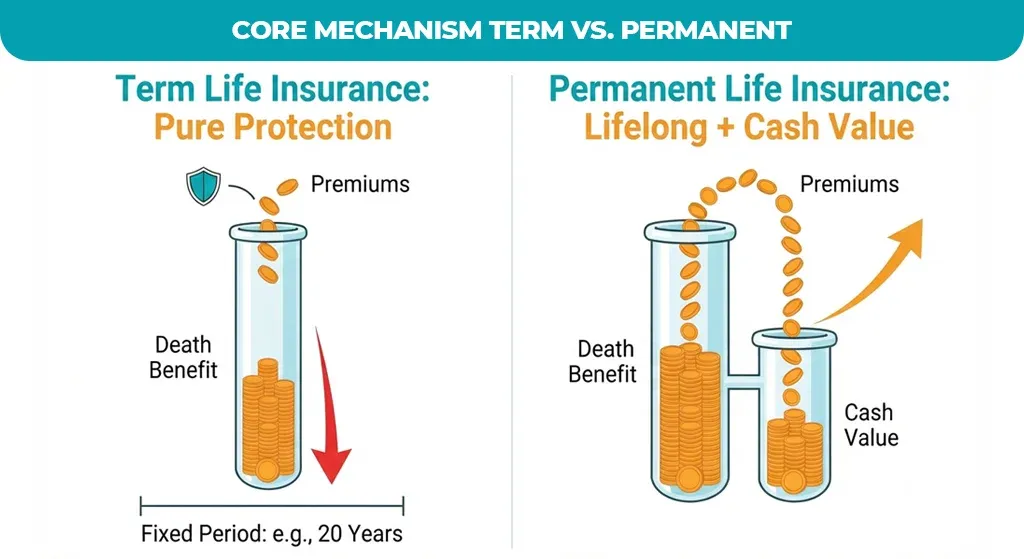
Term life insurance is pure death-benefit protection that covers you for a set period, typically 10, 20, or 30 years. Your beneficiaries get the death benefit if you die within that time frame. If the term ends and you’re still alive, coverage simply expires unless you renew or convert it.
How Term Life Insurance Works
You choose a coverage amount and a term length, then pay a level premium for the life of that term. When the term expires, most policies offer a few paths forward: let the coverage lapse, renew annually at a sharply higher, age-based rate, or exercise a conversion privilege to switch into a permanent policy without a new medical exam.
Pros, Cons, and Best Use Cases
- Pro: Affordability: Term insurance is the most cost-efficient way to secure a large death benefit, which is why it dominates first-time life insurance purchases among younger buyers.
- Pro: Simplicity: No investment components, riders, or dividend schedules to track just straightforward coverage.
- Con: No cash value: Every dollar you pay goes toward mortality risk protection, not savings.
- Con: Expiring coverage: If you still need protection after the term ends, renewal premiums can climb dramatically because they’re re-priced to your current age.
Industry consumer research from LIMRA has consistently shown that term insurance represents the large majority of new individual life insurance policies purchased, largely because it lets young families lock in substantial coverage often matching a mortgage balance or years of income at a fraction of the cost of permanent insurance.
What Is Permanent Life Insurance?
Permanent life insurance provides lifelong coverage that stays in force until death, as long as premiums are paid, and it includes a built-in cash value component that grows on a tax-deferred basis over time.
Types of Permanent Policies: Whole vs. Universal
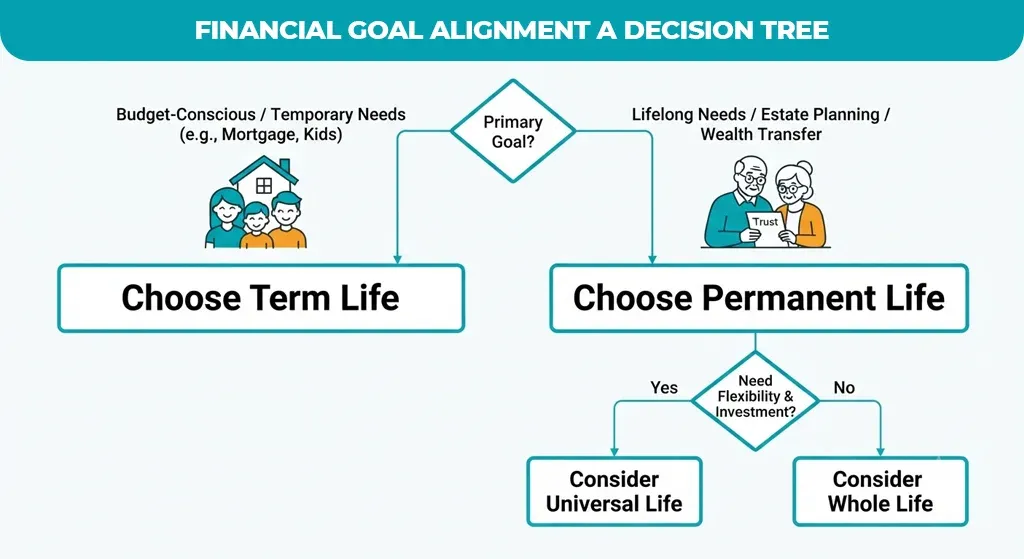
Whole life insurance offers fixed premiums and a guaranteed minimum rate of cash value growth, plus the possibility of non-guaranteed dividends from participating insurers.
Universal life insurance offers more flexibility; you can adjust premiums and death benefits within limits, and cash value growth is tied to a stated interest rate or, in the case of indexed universal life, to the performance of a market index (with caps and floors).
Building Cash Value
A portion of every permanent life insurance premium is allocated to a cash value account that grows over time. According to explanatory materials from the Insurance Information Institute, policyholders can typically borrow against this cash value, withdraw a portion of it, or use it to help cover premiums later in life, though unpaid loans and withdrawals reduce the eventual death benefit.
Head-to-Head Comparison: Term vs Permanent Life Insurance
At the highest level, the term vs permanent life insurance decision comes down to three trade-offs: how much coverage you can afford, how long you need that coverage, and whether you want an investment element bundled into your policy. The table below breaks down permanent vs term life insurance across the categories that matter most.
| Category | Term Life Insurance | Permanent Life Insurance | Cash Value | Best For |
| Cost | Low often 5–10x cheaper for the same death benefit | High significantly higher premiums for identical coverage | None | Budget-conscious buyers |
| Duration | Fixed period (10, 20, or 30 years) | Lifelong, as long as premiums are paid | N/A | Temporary vs. lifetime needs |
| Cash Value | Does not build cash value | Builds tax-deferred cash value over time | Yes | Long-term savings goals |
| Complexity | Simple, straightforward structure | More complex (riders, loans, dividend options) | Moderate–High | Hands-on planners |
| Primary Audience | Young families, income replacement, debt protection | Estate planning, lifelong dependents, high net worth | N/A | Long-horizon financial goals |
Cost vs. Coverage Breakdown
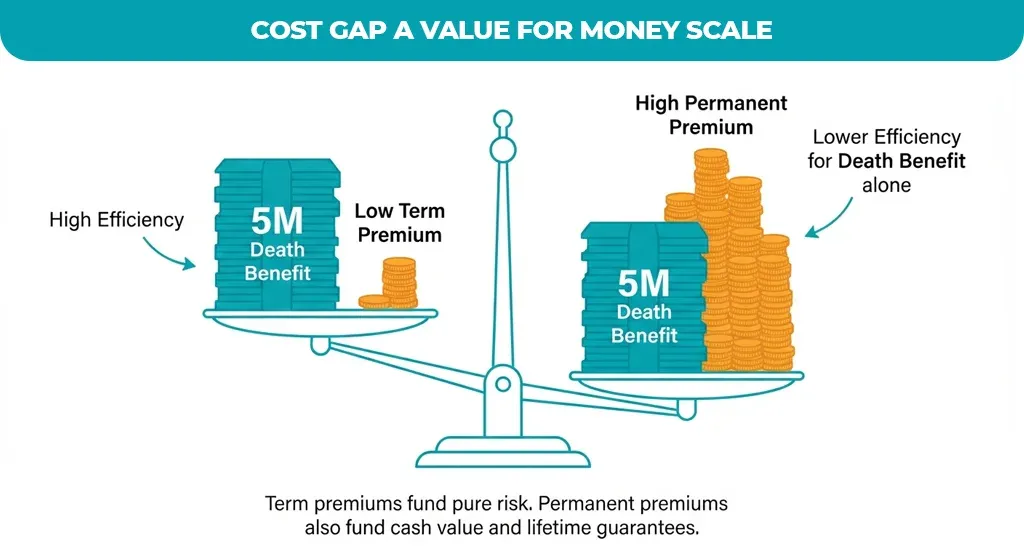
For the same death benefit, term insurance can cost roughly five to ten times less than permanent insurance, because term premiums fund pure mortality risk while permanent premiums also fund lifelong coverage guarantees and a savings component. A healthy 35-year-old, for example, will typically pay a small fraction for a 20-year term policy compared to a whole life policy with an identical face value.
Key Differences at a Glance
- Duration: Temporary, scheduled protection versus coverage that lasts your entire life.
- Investment element: Pure risk protection versus a policy that doubles as a forced-savings or tax-advantaged growth vehicle.
- Flexibility: Term is simple and fixed; permanent policies often allow adjustable premiums, loans, and withdrawals.
Pros and Cons: Weighing Your Options Objectively
When Term Insurance Wins
Term life insurance tends to be the stronger choice for young families balancing a tight budget, anyone whose primary need is replacing income during their working years, and households looking to protect against a specific debt obligation, such as a mortgage, until it’s paid off.
- Young families: Maximum coverage per premium dollar during the years dependents need it most.
- Income replacement: Coverage that lines up with your remaining working years.
- Debt protection: A term that matches your mortgage or loan payoff schedule.
When Permanent Insurance Makes Sense
Permanent coverage tends to fit high-net-worth households doing estate planning, families with a lifelong dependent such as a child with special needs, anyone who wants guaranteed funds set aside for final expenses, or savers who have already maxed out tax-advantaged retirement accounts and want another vehicle for long-term, tax-deferred accumulation.
Financial planning guidelines from consumer resources such as Forbes Advisor and NerdWallet often suggest evaluating life insurance premiums as a modest percentage of your overall budget, prioritizing adequate coverage amounts over policy type alone, and reassessing your needs whenever your financial situation changes significantly.
Can You Have Both? The “Buy Term and Invest the Difference” Strategy
Hybrid Strategies
A well-known financial philosophy, often summarized as “buy term and invest the difference,” involves purchasing affordable term coverage and directing the premium savings into retirement accounts like a 401(k) or IRA, rather than paying for a permanent policy’s built-in savings component.
Another common approach is laddering: buying multiple term policies with staggered lengths so your total coverage steps down over time as obligations like a mortgage balance or dependent years decrease.
Financial Goal Alignment: A Decision Tree
Blending Term and Permanent Coverage
Some households layer the two: a smaller permanent policy covers lifelong needs like final expenses or estate planning, while a larger term policy sometimes attached as a rider covers the higher-need peak earning years when income replacement matters most.
Comparisons between long-run historical market average returns and the fixed, guaranteed internal rates of return in standard whole life cash value policies often show that market-based investing has the potential for higher long-term growth, though it also carries more volatility and risk than a guaranteed policy’s cash value.
Conclusion
Choosing between term vs permanent life insurance is one of the most critical financial decisions you will make to protect your family’s long-term security. The right choice depends entirely on your budget, whether your need for coverage is temporary or lifelong, and if you want a built-in cash value component. Term policies deliver maximum, budget-friendly protection during your peak earning years when liabilities like mortgages and child-rearing costs are at their highest, making them ideal for young families.
Ultimately, finding the ideal term vs permanent life insurance strategy comes down to aligning your policy type with your specific financial goals and timeline. While term insurance offers unbeatable affordability for pure risk protection, permanent policies earn their higher price tag through permanent guarantees and asset growth. Many households discover that the best approach isn’t choosing strictly one over the other, but rather blending both solutions strategically or utilizing convertible term options as their life circumstances and financial needs evolve over time.