
Introduction
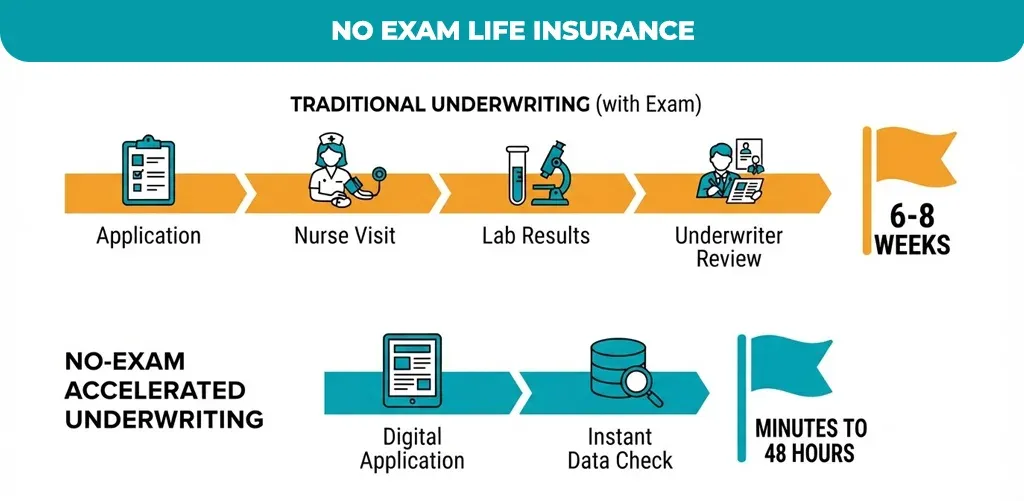
Nobody looks forward to the phone call. A stranger shows up at your kitchen table, draws a vial of blood, asks you to fill a cup, and then you wait. And wait. Sometimes for six weeks.
For a lot of people, that gap between “I should get life insurance” and “I actually have life insurance” is where good intentions go to die.
Life insurance no medical exam policies exist to close that gap. Instead of a nurse visit and a lab report, insurers lean on digital records, algorithms, and a short questionnaire to decide your risk in minutes instead of weeks. It’s not a gimmick; it’s a genuine shift in how underwriting works, built on the same data-driven approach that’s reshaped banking and healthcare.
This guide walks through how no-exam coverage actually works, the three main types you’ll encounter while shopping, who tends to benefit most, and the trade-offs worth weighing before you sign anything. By the end, you’ll be able to judge whether skipping the exam is a smart shortcut for your situation or a costly detour.
What Is No Medical Exam Life Insurance?
No medical exam life insurance is exactly what it sounds like: a policy issued without the traditional in-person physical, no bloodwork, no urine sample, no nurse measuring your blood pressure at your dining table.
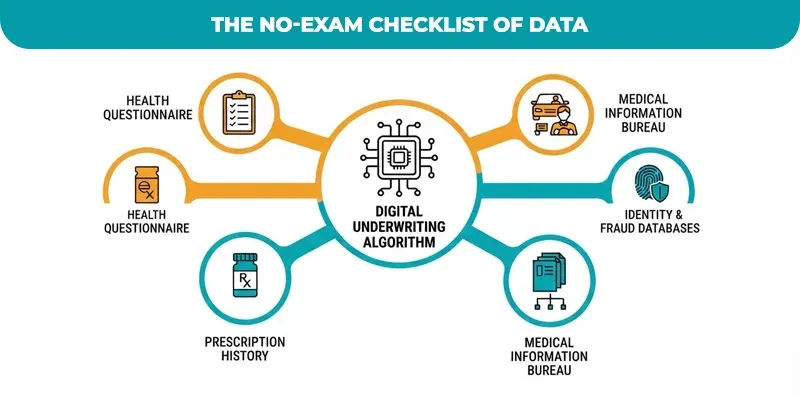
How the underwriting actually works: Instead of lab results, insurers run what’s called accelerated underwriting. They pull data you’ve already generated elsewhere, prescription drug history from pharmacy databases, motor vehicle records, medical information bureau reports, and sometimes credit-based insurance scores. Combine that with your answers to a health questionnaire, and an algorithm (often backed by a human underwriter for edge cases) produces a decision.
Why does this exist at all? Partly convenience, partly competition. Carriers realized that a 6-to-8-week underwriting cycle was costing them customers who simply gave up or bought from a faster competitor. Digital-first insurers pushed the entire industry toward instant, app-based issuance the same way online banking pushed branches toward faster loan approvals.
Types of No-Exam Life Insurance Policies

Accelerated Underwriting
This is the closest thing to “the best of both worlds.” You skip the exam, but the insurer still digs into third-party data to assess your risk accurately. Healthy, younger applicants often qualify for surprisingly large death benefits, sometimes into seven figures, at rates close to traditional fully-underwritten policies.
Simplified Issue
Here, you answer a set of yes/no health questions (heart disease? cancer in the last 10 years? tobacco use?), but there’s no lab work at all. Coverage tends to be moderate, and it’s commonly attached to permanent policies like whole life, though term versions exist, too.
Guaranteed Issue
No health questions, no exam, near-automatic approval. This is the safety net for people who’d otherwise be declined, often marketed toward final expense coverage. The trade-off: higher cost per dollar of coverage and lower maximum death benefits.
Quick reference:
| Policy Type | Approval Speed | Typical Coverage Limits | Best For |
| Accelerated Underwriting | Minutes to 48 hours | $100,000 – $1M+ | Healthy applicants who want long-term coverage fast |
| Simplified Issue | Same day to a few days | $25,000 – $500,000 | Applicants with minor health issues, moderate coverage needs |
| Guaranteed Issue | Minutes (near-automatic) | $5,000 – $25,000 | Seniors or high-risk applicants needing final expense coverage |
Secure Your Family's Future with Confidence
Don’t leave your loved ones' financial security to chance. Use our expert tools and free resources to find the perfect coverage today.
Benefits and Trade-offs: What You Need to Know

The Pros
- Speed: Many accelerated underwriting applications are approved same-day, sometimes within minutes of hitting submit.
- Convenience: The entire process, application, questionnaire, and e-signature happen online or over the phone. No appointments to schedule around.
- Accessibility: Guaranteed issue policies create a path to coverage for people with pre-existing conditions who’d be declined or heavily rated under traditional underwriting.
The Cons
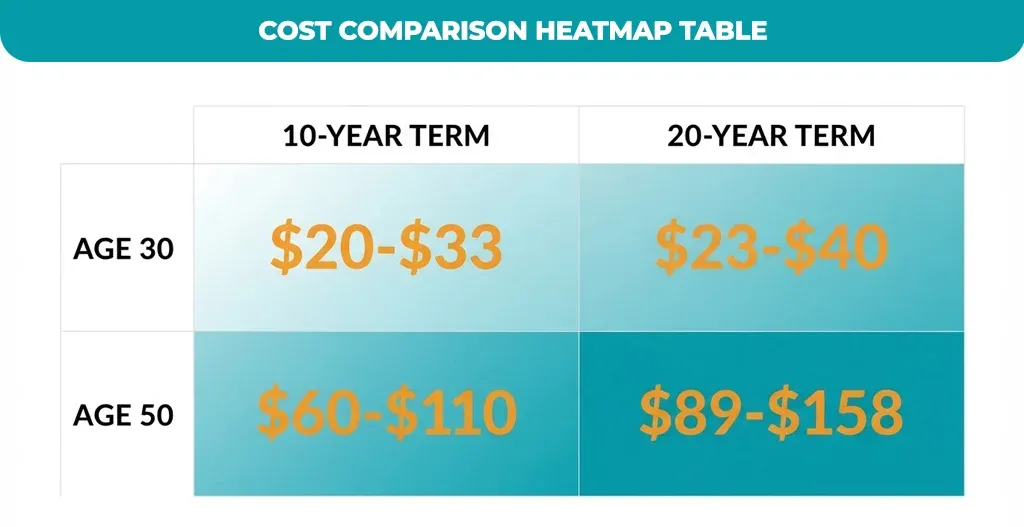
- Cost: Insurers price in the uncertainty of not verifying your health directly, so premiums for no-exam policies typically run higher than a comparable fully-underwritten policy for the same healthy applicant.
- Coverage caps: Guaranteed and simplified issue policies usually top out well below what a medically underwritten term policy could offer, often $25,000 to $500,000, versus $1M or more.
- Graded benefit periods: Some guaranteed issue policies pay out only a return of premiums (plus interest) if the insured dies of natural causes within the first two to three years. Full benefits kick in after that waiting period.
Who Should Think About Life Insurance Without a Medical Exam?
The “Hurry-Up” Group: Buying a home, co-signing a loan, or facing a lender requirement for coverage before closing? No-exam policies can bind coverage in days, not weeks.
The Health-Conscious (But Private): If needle phobia, a packed schedule, or simple distaste for medical exams has kept you from applying, this removes the barrier entirely.
The Challenged Applicant: Those managing a chronic condition, such as diabetes, hypertension, or a history that might trigger a decline or a heavily-rated premium under traditional underwriting, sometimes fare better here.
The “Small Needs” Applicant: If your goal is strictly covering funeral and final expenses rather than income replacement, guaranteed issue policies are built exactly for that job.

How to Apply: A Step-by-Step Guide
- Determine your needs: Decide how much coverage you actually need and whether term or permanent (whole life) makes more sense for your goals and timeline.
- Gather your information: Have your personal details, financial information, and health history, including current prescriptions, ready before you start the application.
- Compare quotes: Rates for the same coverage amount can vary significantly between carriers. Get multiple life insurance quotes with no medical exam before committing to the first offer you see.
- Be honest: Misrepresenting your health history even to speed up approval can give the insurer grounds to deny a claim later, during the contestability period. It’s not worth the risk to your beneficiaries.
Conclusion
No medical exam life insurance is a genuinely useful tool, but it’s just not a universal fix. For a healthy 35-year-old chasing a $750,000 term policy, accelerated underwriting can deliver traditional-grade pricing without the hassle. For a 68-year-old managing a health condition who mainly wants to cover funeral costs, guaranteed issue may be the only realistic path to coverage at all.
The right choice depends on your health profile, your budget, and what the coverage actually needs to accomplish for the people you leave behind. If you’re unsure which category you fall into, a conversation with a licensed independent agent, someone who can shop multiple carriers on your behalf, is worth the twenty minutes it takes.
Whatever you land on, remember this: the best life insurance policy isn’t the one with zero trade-offs. It’s the one that’s actually in force when your family needs it. Getting some protection in place today beats waiting for the “perfect” policy indefinitely.
FAQs
Yes. Accelerated, simplified, and guaranteed issue policies are all real, regulated insurance products sold by major carriers. They just use data and questionnaires instead of a physical exam to assess risk.
Colonial Penn’s advertised $9.95-a-month plan is a guaranteed acceptance whole life policy that provides a small, fixed unit of coverage (often around $1,000–$2,000 depending on age) rather than a large death benefit. It’s marketed as an entry-level starter amount, and most buyers purchase additional units to reach a meaningful payout.
In many cases, yes. Applicants with a pacemaker are often approved through simplified issue or guaranteed issue policies, sometimes with a rated (higher) premium, since traditional fully-underwritten policies may be harder to qualify for with that history.
Often, yes, depending on the stage, treatment outcome, and time since diagnosis. Early-stage, successfully treated melanoma may still qualify for accelerated or simplified issue underwriting after a waiting period, while more advanced cases may need to rely on guaranteed issue coverage.
It depends heavily on age, health, and policy type, but a healthy 40-year-old non-smoker might see term rates roughly in the $30–$50 per month range through traditional underwriting, while a comparable no-exam accelerated policy could run somewhat higher. Getting exact numbers requires comparing quotes across carriers for your specific profile.