


What Factors Determine How Much Life Insurance Costs?
If you are wondering how much does it cost for life insurance, looking only at age is not enough. Insurers evaluate multiple factors during underwriting.
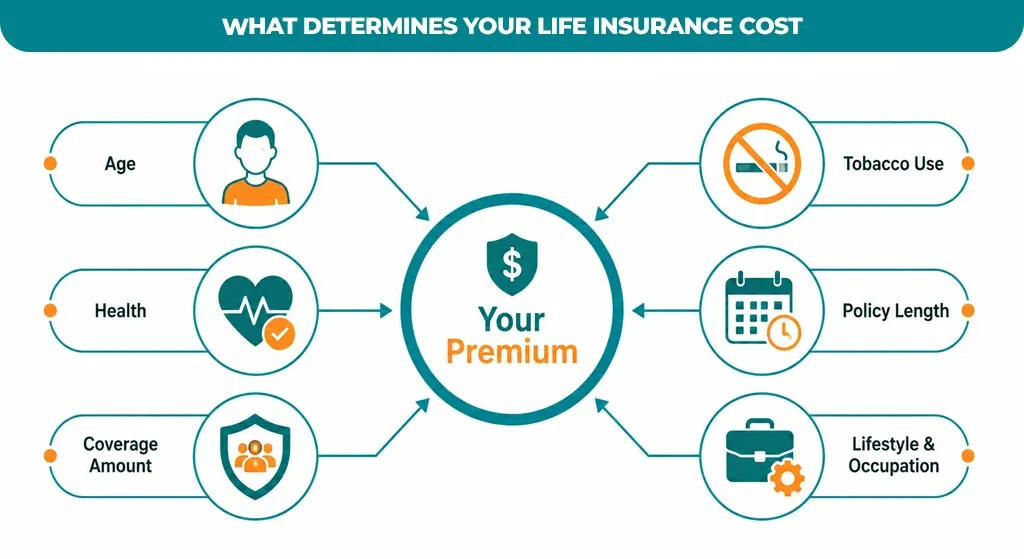
Age
Age has a direct influence on pricing. Younger applicants may qualify for lower premiums because their expected mortality risk is generally lower. Buying earlier can therefore help you lock in a lower rate, assuming the policy is appropriate for your needs and you qualify for favorable underwriting.
Health
Your current health can significantly influence the premium. Depending on the insurer and product, underwriting may consider information such as:
- Medical history
- Current health conditions
- Prescription medication
- Blood pressure
- Cholesterol
- Height and weight
- Family medical history
- Previous medical procedures
The underwriting process is essentially the insurer’s evaluation of the risk associated with covering you.
NAIC explains that underwriting involves examining risk and determining whether coverage should be offered, what it should cost, and potentially how much coverage may be available.
Tobacco and Nicotine Use
Tobacco use can result in significantly higher premiums because insurers associate tobacco use with increased health risks. Applicants who use tobacco or nicotine products may therefore receive less favorable rates than otherwise comparable nonsmokers.
If you are considering applying for coverage, answer questions about tobacco use honestly. Insurance applications should be completed accurately because insurers verify application information during underwriting.
Coverage Amount
A $1 million policy generally costs more than a $500,000 policy because the insurer is accepting a larger potential death benefit. However, the relationship is not necessarily a simple one-to-one calculation. Pricing depends on the insurer’s underwriting and product structure.
The right question is therefore not simply “how much life insurance can I afford?” but also “how much coverage does my family actually need?”
Policy Length
Term life insurance can be purchased for different periods. A 10-year policy and a 30-year policy may have very different premiums because the insurer is providing protection for different lengths of time. Choose a term that aligns with your financial responsibilities rather than automatically selecting the longest available period.
Policy Type
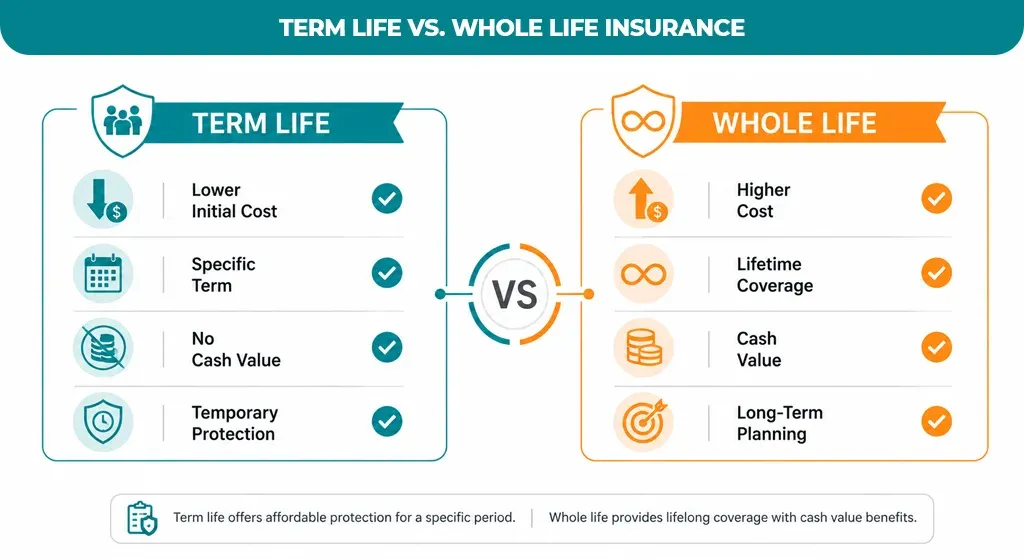
Term and permanent insurance have different pricing structures. Term insurance generally has lower initial premiums and does not typically accumulate cash value. Permanent insurance can provide lifetime coverage and may include cash value, but premiums are generally higher.
Occupation and Hobbies
Certain occupations and recreational activities can affect underwriting because they may involve additional risks. Depending on the insurer, activities such as aviation, commercial fishing, skydiving, or other high-risk pursuits may be considered during the application process.
Term Life Insurance vs. Whole Life Insurance Cost
One of the biggest differences in how much life insurance costs comes from choosing term or permanent coverage.
Feature | Term Life | Whole Life |
Coverage period | Specific term | Lifetime, subject to policy terms |
Initial cost | Generally lower | Generally higher |
Cash value | Generally none | Yes |
Complexity | Usually simpler | More complex |
Primary purpose | Temporary financial protection | Long-term/lifetime protection |
Term Life Insurance: Pros and Cons
Pros:
- Generally lower initial premiums
- Straightforward structure
- Useful for temporary financial obligations
- Can provide substantial death-benefit protection
Cons:
- Coverage is limited to the policy term
- Generally does not build cash value
- Renewing later may result in higher premiums
Whole Life Insurance: Pros and Cons
Pros:
- Designed for lifetime coverage
- Includes a cash-value component
- Can provide long-term financial planning features
- Premium structure may be level according to policy terms
Cons:
- Higher premiums
- More complex policy structure
- Requires careful review of guarantees, values, fees, and policy assumptions
The NAIC recommends reviewing policy values and understanding which elements are guaranteed and which are not before purchasing a permanent life insurance policy.
How Can the Cost of Your Life Insurance Be Reduced?
If you are concerned about how much life insurance will cost, there are several practical steps you can take.
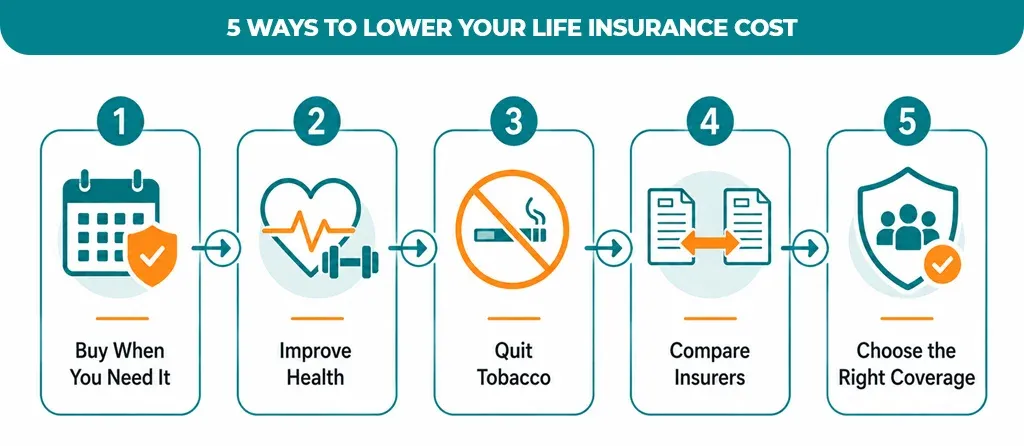
Buy Coverage When You Have a Clear Need
Waiting can affect your future pricing because age and health can change. If you have dependents, substantial financial obligations, or other reasons for coverage, getting quotes sooner can help you understand your options.
Improve Modifiable Health Factors
If you have time before applying, improving certain health measures may potentially help your underwriting outcome. For example, maintaining a healthy weight, managing blood pressure, and following appropriate medical advice can support better overall health.
Stop Using Tobacco
Tobacco use can materially increase life insurance premiums. If you quit, ask insurers about their eligibility rules for nonsmoker classifications because requirements can vary.
Compare Multiple Insurers
Insurance companies do not necessarily price every applicant identically. Comparing multiple carriers can help you identify a policy that fits your financial situation and coverage needs.
An independent insurance professional can help you compare available options rather than relying on a single quote.
Choose the Right Coverage Amount
Buying more insurance than you need can unnecessarily increase premiums. At the same time, buying too little can leave your beneficiaries without adequate financial protection. The objective should be appropriate coverage, not simply the cheapest possible policy.
Conclusion
So, how much does life insurance cost? The most accurate answer is that it depends on the person, the policy, and the insurer. A healthy younger adult may qualify for relatively affordable term coverage, while older applicants or people with certain health or lifestyle risks may pay considerably more. Permanent policies generally cost more than term insurance because they can provide lifetime protection and additional policy features. The key is not to focus exclusively on finding the lowest premium. Instead, look for the right combination of appropriate coverage and affordable premiums.
If you are comparing life insurance options, Premier Services Agency can help you evaluate available coverage and understand how different policy structures may affect your premium. Rather than guessing the average price of life insurance, getting personalized quotes allows you to compare options based on your actual age, health profile, coverage needs, and budget. Don’t let assumptions about price prevent you from exploring coverage.