


Is life insurance worth it? It’s a fair question, especially when almost half of U.S. adults either don’t have coverage or don’t have enough of it. According to the 2026 Insurance Barometer Study from LIMRA and Life Happens, 51% of Americans between 18 and 75 say they own a life insurance policy, while roughly 100 million adults report they need life insurance or need more of it. The gap exists largely because people overestimate the cost. The same study found that adults age 18 to 30 guessed the price of a basic term policy at 10 to 12 times its actual cost.
This guide breaks down when life insurance is worth getting, when it isn’t, what term, whole, universal, and supplemental policies actually cost, what happens if you sell a policy you no longer need, and how to compare insurers using the ratings regulators and independent agencies publish. Every figure below is sourced and cited so you can verify it yourself.
Key Takeaways
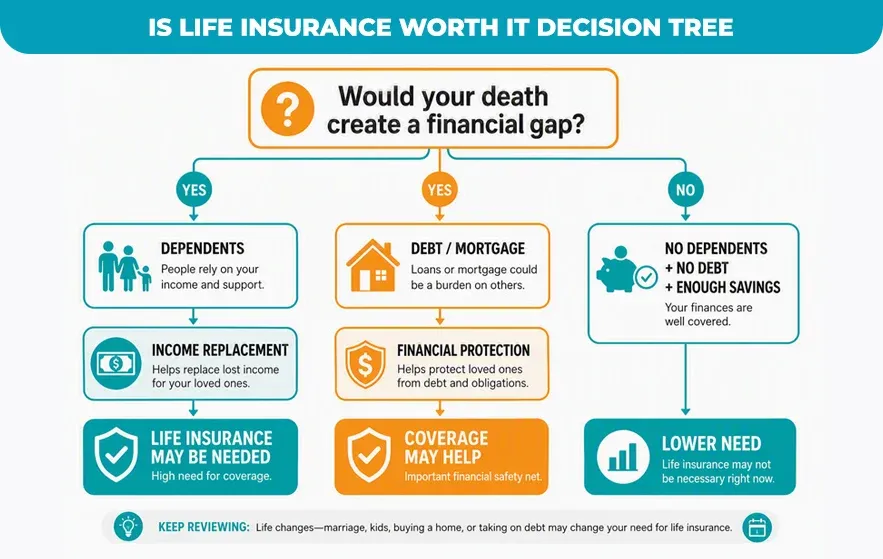
- Life insurance is generally worth it if someone (a spouse, child, business partner, or aging parent) depends on your income or would inherit your debt.
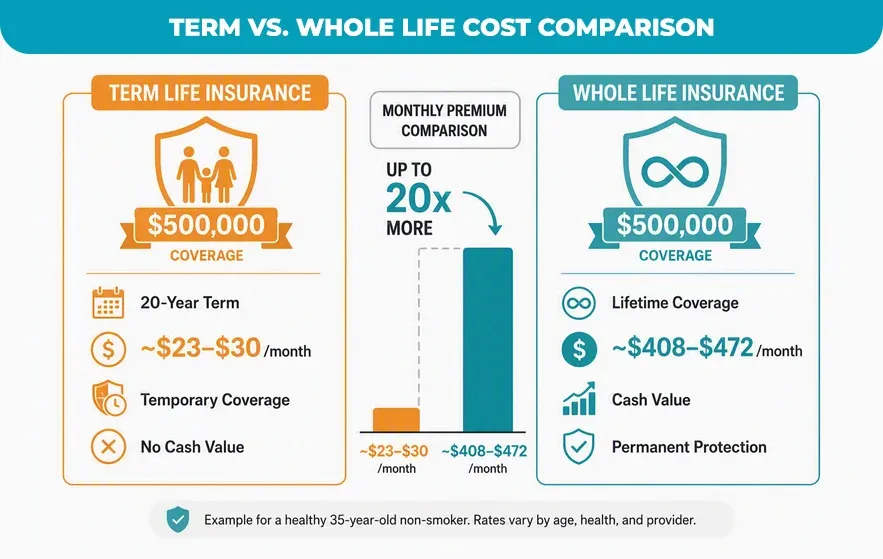
- Term life insurance is the cheapest way to get meaningful coverage; a healthy 30-year-old can get $500,000 in 20-year term coverage for about $23–$30 a month (Policygenius).
- Whole and universal life insurance cost significantly more but add lifelong coverage and cash value; the trade-off only makes sense for specific financial goals.
- About 51% of Americans own life insurance, and roughly 100 million adults are uninsured or underinsured, per the 2026 LIMRA and Life Happens Insurance Barometer Study.
- Selling an unneeded policy through a life settlement paid consumers nearly nine times more, on average, than surrendering it to the insurer in 2026, according to the Life Insurance Settlement Association.
What Life Insurance Actually Does
A life insurance policy is a contract between you and an insurance company: you pay premiums, and in exchange, the insurer pays a death benefit to your named beneficiaries when you die. The company sets your premium during underwriting, the process where it evaluates your age, health, and lifestyle to price your risk. Every state’s insurance department and the National Association of Insurance Commissioners (NAIC) regulate how insurers set rates, handle claims, and hold reserves to make sure the death benefit is actually there when a claim is filed.
Life insurance falls into two broad categories:
- Term life insurance covers you for a set period, typically 10 to 30 years, and pays a death benefit only if you die during that term. It has no cash value.
- Permanent life insurance, including whole life and universal life, covers you for your entire life as long as premiums are paid, and builds cash value you can borrow against or withdraw.
Is Life Insurance Worth It? The Factors That Actually Decide
Life insurance is worth it when your death would create a financial gap for someone else, and it’s less necessary when it wouldn’t. It isn’t a question with one universal answer, and the LIMRA data above confirms that: ownership splits almost evenly across the population because circumstances differ so much.
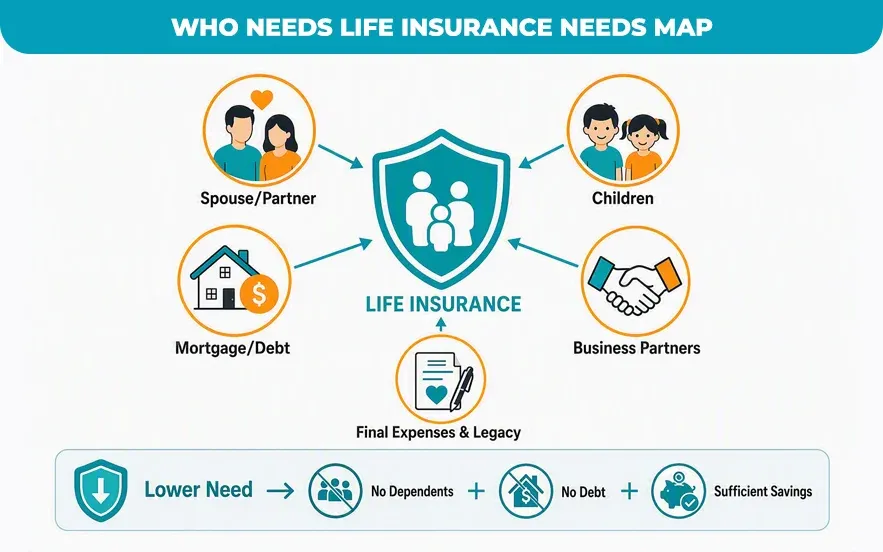 You’re more likely to benefit from a policy if:
- You have a spouse, partner, or children who rely on your income for housing, food, or childcare.
- You carry a mortgage, co-signed loans, or other debt that wouldn’t disappear when you die.
- You’re the primary or sole earner in your household.
- You own a business with partners who would need a buyout funded.
- You want to leave money for final expenses, estate taxes, or a charitable gift.
Life insurance is worth getting less urgently if you’re single with no dependents, debt-free, and already have enough liquid savings to cover a funeral and any outstanding bills. In that case, the money you’d spend on premiums may do more for you in a retirement account or emergency fund.
Is Term Life Insurance Worth It?
For most working adults, term life insurance is worth it because it delivers the largest death benefit per dollar of premium. Because it only pays out if you die within the term, insurers price it far lower than permanent coverage. Policygenius rate data shows a 30-year-old, non-smoking woman in good health pays about $22.99 a month for a 20-year, $500,000 term policy, while a man of the same age and health pays about $29.32 a month. Premiums climb with age: Guardian Life reports that a healthy 30-year-old male typically pays around $30 a month for the same coverage, underscoring how consistent these figures are across carriers.
Term life insurance tends to be worth it when:
- You need coverage for a defined period, such as until a mortgage is paid off or children become financially independent.
- You want the maximum death benefit for the lowest monthly cost.
- You’re comfortable that you won’t need coverage past a certain age, since premiums rise sharply if you renew after the term ends.
Is Permanent Life Insurance Worth It? Whole and Universal Life
Whether permanent life insurance is worth it depends on whether you actually need lifelong coverage and the cash-value feature, because you’ll pay substantially more for both. Policygenius data shows a 30-year-old male in good health paying about $472 a month for a $500,000 whole life policy, versus roughly $29 a month for equivalent term coverage; a 30-year-old female pays about $408 a month for whole life. That’s roughly 14 to 16 times the cost of term coverage for the same death benefit.
Is Whole Life Insurance Worth It?
Whole life insurance is worth it for people who want guaranteed lifetime coverage, predictable premiums that never rise, and a savings component they can borrow against. It tends to make less sense purely as an investment vehicle, since the cash-value growth in the early years is slow and the premium is largely funding the insurance cost and insurer’s expenses first.
Is Universal Life Insurance Worth It?
Universal life insurance offers more flexibility than whole life, letting you adjust premiums and death benefits within limits, and its cash value is often tied to an interest rate or index. It’s worth considering if you want that flexibility and understand that underfunding the policy can cause it to lapse, unlike a paid-up whole life policy. It is not automatically worth it for someone who simply wants affordable income replacement; term coverage does that job more cheaply.
Is Supplemental or Voluntary Life Insurance Worth It?
Supplemental and voluntary life insurance, the extra coverage many employers let you buy on top of a basic group policy, is worth it mainly as a top-up, not a replacement for an individual policy. LIMRA’s 2025 Insurance Barometer Study found that 55% of working adults report having life insurance coverage through their employer, but that group coverage is often limited to one or two times your salary and usually ends when you leave the job. Voluntary and supplemental coverage is worth adding when:
- Your base employer policy alone wouldn’t replace enough income for your dependents.
- You have a health condition that makes individual coverage expensive, since group rates are usually not based on your personal health.
- You want inexpensive coverage for a spouse or child alongside your own policy.
It’s worth pairing with, rather than replacing, an individual policy if you plan to change jobs, since most group and voluntary coverage isn’t portable.
Is It Worth Having Life Insurance After 60?
Life insurance after 60 is worth it mainly for final expenses, estate planning, or leaving a legacy, rather than income replacement, since most people in this age group are closer to retirement than to raising dependent children. Premiums rise substantially with age because life expectancy shortens, which is why many people in their 60s and beyond look at smaller final expense or guaranteed-issue whole life policies instead of large term policies. Before buying, it’s worth checking whether an existing employer or older term policy can be extended, converted, or is still cheaper than a new policy, since converting an existing term policy to permanent coverage often avoids new underwriting.
Is Selling a Life Insurance Policy Worth It? What Your Policy Is Really Worth
If you no longer need or can’t afford a policy, selling it through a life settlement is often worth far more than letting it lapse or surrendering it to the insurer for cash value. The Life Insurance Settlement Association’s 2026 market data report found that policyholders who sold through LISA member companies received an average payout of $212,066, compared with an average cash surrender value of just $24,360 offered by insurers- nearly nine times more. Across the industry, LISA members paid consumers a combined $626.6 million in 2025 alone.
A few things affect how much a life insurance policy is worth if you sell it:
- Face value of the policy and the type of policy (universal and convertible term policies are common candidates).
- Your age and health, since settlement buyers price offers around life expectancy.
- How many years of premiums remain and how much the policy currently costs to maintain.
Selling isn’t automatically the better move for every policyholder. Your beneficiaries lose the eventual death benefit, and settlement proceeds can have tax implications, so it’s worth getting an independent valuation and speaking with a licensed settlement broker or financial advisor before deciding whether selling a term or permanent policy makes sense for your situation.
Choosing a Company: What AM Best and NAIC Ratings Tell You
Whether a specific insurer is worth choosing, whether that’s a large national carrier, a membership-based insurer like AAA, or a children’s policy provider like Gerber Life, comes down to financial strength, price, and how the policy fits your needs, not brand recognition alone. AM Best assigns financial strength ratings that indicate an insurer’s ability to pay future claims, and the NAIC publishes complaint index data that shows how a company’s complaint volume compares with its market share.
Before buying from any company, including AAA or Gerber Life, it’s worth checking:
- The insurer’s AM Best rating (A or higher is generally considered strong).
- The NAIC complaint index for that company in your state.
- Whether the product is guaranteed-issue (easier to qualify for, but usually more expensive and lower coverage, common with children’s and senior policies) or fully underwritten (requires health questions or an exam, usually cheaper for healthy applicants).
Life Insurance vs. Savings: Which Is Worth More?
Life insurance and savings solve different problems, so the better option depends on what you’re protecting against. Savings and investment accounts grow steadily, and you control them, but they take years to reach a meaningful balance and provide no guaranteed payout if you die early. A term life insurance policy guarantees a set payout from day one, for a fraction of the equivalent savings amount, but that payout only exists while premiums are being paid and the policy is in force.
A common approach is to use both: enough savings to cover an emergency fund, and life insurance sized to replace lost income or pay off debt if you die before you’ve had time to save enough. Neither fully replaces the other for someone with dependents.
How to Decide If Life Insurance Is Worth It for You
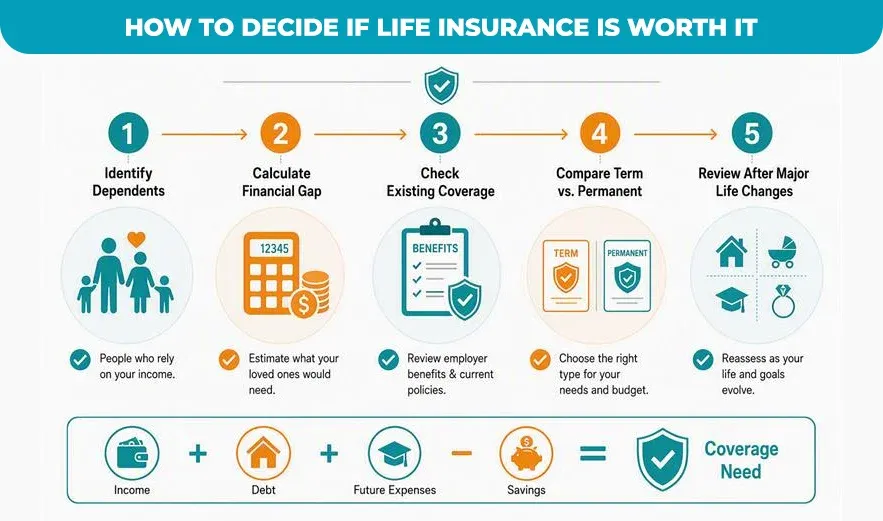
- List who depends on your income or would inherit your debt if you died.
- Estimate the payout needed to cover that gap for a set number of years (income replacement, mortgage balance, childcare, or college costs are common starting points).
- Compare term and permanent quotes for that coverage amount from at least two or three insurers with strong AM Best ratings.
- Check whether your employer’s group or supplemental coverage already covers part of that need.
- Revisit the policy after major life changes: marriage, a new child, a new mortgage, or paying off debt.
The Bottom Line
Is life insurance worth it? For anyone whose income, debt, or caregiving responsibilities would leave someone else worse off financially, the data says yes: term coverage is inexpensive relative to the protection it provides, and even permanent policies build a financial asset rather than disappearing if unused. It’s worth getting less urgently for people without dependents or debt. The decision isn’t about following a rule; it’s about matching the policy type, size, and insurer to the specific gap your death would leave behind.
If you’re ready to see what coverage would actually cost for your age and health, compare quotes from two or three insurers with strong AM Best ratings before you decide, and revisit that decision every time your finances or family situation changes.