


Introduction
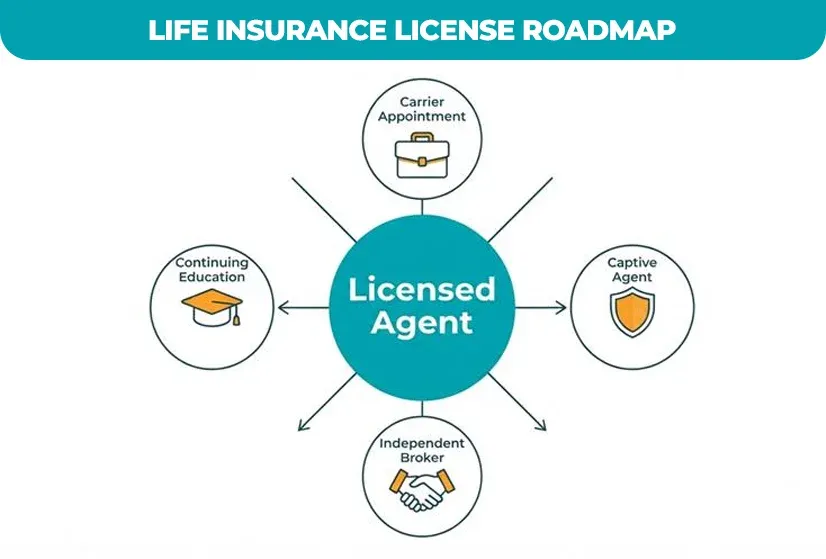
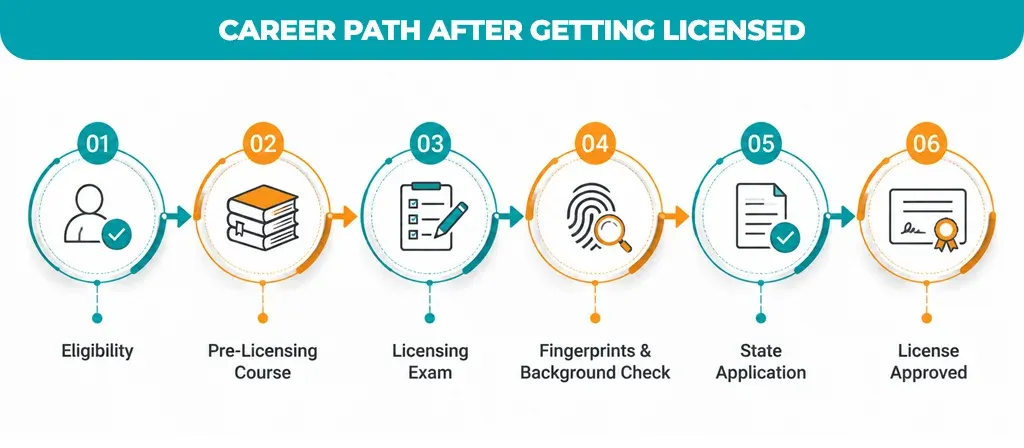
Getting a life insurance license is the single requirement standing between you and a career with uncapped income potential, a flexible schedule, and the chance to protect families financially when it matters most. Every state requires producers to hold an active life and health insurance license before they can sell a policy, and the path to earning one follows a predictable sequence: meet the eligibility rules, complete insurance pre-licensing education where required, pass the state exam, clear a background check, and submit your application.
This guide walks through every step of how to get a life insurance license, including state-specific coursework rules, what’s actually on the exam, realistic cost breakdowns, and what happens after you’re approved. Whether you’re researching a Florida life insurance license, a life insurance license Texas applicants can earn through self-study, or licensing rules in California, the core process is the same nationwide with a handful of state-level differences worth knowing before you start.
Understanding Basic Eligibility and Prerequisites
Basic Requirements to Qualify for a Life Insurance License
Before enrolling in a course or scheduling an exam, confirm you meet your state’s baseline eligibility standards. These requirements are fairly consistent across the country because most states coordinate licensing data through the National Insurance Producer Registry (NIPR).
- Minimum age: You must typically be at least 18 years old to apply for a life insurance agent license.
- Clean background: State departments of insurance run a background check and require fingerprinting; felony convictions or fraud-related offenses can disqualify or delay an application.
- State residency: You’ll first apply for a “resident license” in the state where you live, which then serves as the foundation for adding non-resident licenses in other states later.
Because licensing data flows through the NIPR’s centralized system, a clean application in your home state makes it significantly easier to expand into additional states down the road.
Navigating State-Specific Pre-Licensing Education
Do You Need Insurance Pre-Licensing Education?
Whether you need formal coursework before sitting for your exam depends entirely on your state. Some states mandate a set number of classroom or online hours; others allow open testing with no required course.
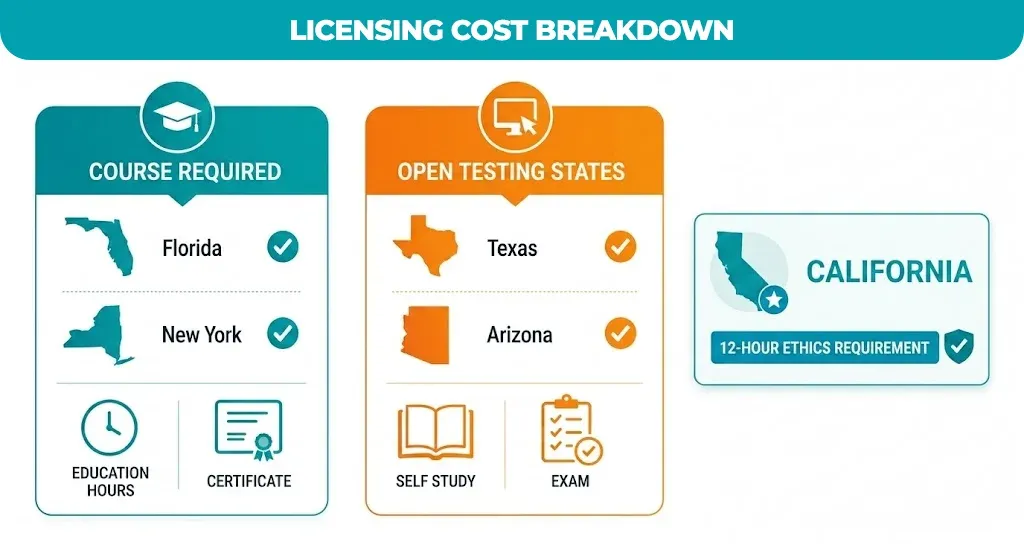
- Course-required states: States such as Florida and New York require structured life insurance pre-licensing course hours, generally ranging from 20 to 60 hours depending on the license type.
- Open-testing states: States such as Texas and Arizona let candidates self-study and go straight to the exam, though a prep course is still strongly recommended.
- California recently shifted its pre-licensing rules to a 12-hour ethics and code requirement, reflecting a broader trend toward streamlined coursework alongside stronger ethics training.
Once you know your state’s rule, you’ll choose a delivery format: online self-study packages, live virtual classes, or in-person bootcamps. Core topics are consistent across every format:
- Term life vs. permanent life insurance
- Whole life and universal life policy structures
- Annuities and how they differ from traditional life products
- Policy provisions, riders, and beneficiary designations
Mastering the Life and Health Insurance Exam
How to Pass the Official Licensing Exam on Your First Try
Once your pre-licensing hours (if required) are complete, you’ll schedule your state exam through a testing vendor such as Pearson VUE or Prometric. Most life and health insurance exams follow a similar format nationwide.
- Format: Typically 100 to 150 multiple-choice questions, administered in a proctored testing center or via online proctoring.
- Passing score: Most states set the passing threshold at 70% or higher.
- Time limit: Usually between two and three hours, depending on the state and license type.
Background Checks, Fees, and Application Submissions
Fingerprinting, State Applications, and Total Costs
After passing the exam, three administrative steps remain: fingerprinting, application submission, and payment of state fees.
- Fingerprinting: Completed electronically, often through IdentoGO or another state-approved vendor, as part of your background check.
- Application: Submitted through the National Insurance Producer Registry (NIPR), which routes your application to your state’s department of insurance.
- Total cost: Course fees, exam fees, fingerprinting, and state filing fees typically add up to between $100 and $400, depending on your state.
A rough breakdown of where that money goes:
- Pre-licensing course fees: $50–$400, depending on format and provider
- Exam sitting fees: $40–$100 per attempt
- State filing and NIPR processing fees: Vary by state, generally $30–$60
If you’re specifically researching a life insurance license Florida application or checking status through a Florida life insurance license lookup tool, your state’s Department of Financial Services website is the authoritative source for current fee schedules and processing times, since these figures can change year to year.
Next Steps: Getting Appointed and Launching Your Career
What Happens After You Get Your Life Insurance License?
Passing the exam and receiving your license is the beginning of your career, not the end of the process. A few decisions shape how quickly you’ll start writing business.
- Carrier appointments: You’ll need to be formally appointed by each insurance carrier whose products you plan to sell.
- Captive vs. independent: Captive agents represent one company exclusively, while independent brokers work through an IMO or FFL and can offer products from multiple carriers.
- Continuing Education (CE): Most states require ongoing CE credits on a renewal cycle (often every one to two years) to keep your license active.
Conclusion
Earning your life insurance license is more than meeting a legal requirement—it’s the first powerful step toward building a rewarding career with unlimited growth potential. By understanding your state’s licensing requirements, completing the necessary education, passing the exam, and submitting your application correctly, you can confidently begin helping individuals and families secure their financial future. Following the right process from the start saves time, reduces costly mistakes, and sets the foundation for long-term success.
Now is the perfect time to take action. Research your state’s requirements, enroll in a trusted pre-licensing course if needed, and start preparing for your exam with confidence. With dedication and the right guidance, earning your life insurance license can open the door to a flexible, high-income career where you make a meaningful difference while achieving your own professional goals.