


Introduction
Securing a final resting place is one of the most meaningful decisions a person can make, not just for themselves, but for the family they leave behind. Whether you are pre-planning your own arrangements or handling an immediate need for a loved one, understanding how burial plots work will protect you from costly mistakes and unnecessary stress.
This guide breaks down burial plot types, burial plot costs, your legal rights as a buyer, and how to ask the right questions before you sign anything.
Understanding Burial Plot Types and Options
Single vs. Companion Plots
A single plot holds one full-body casket burial. A companion plot, sometimes called a double-depth or side-by-side plot, is designed for two people, typically spouses or domestic partners.
- Double-depth plots place one casket above the other in the same footprint, which conserves cemetery space and can be more affordable than purchasing two separate plots.
- Side-by-side companion plots are adjacent single graves sold as a pair, allowing two headstones or one shared monument.
In my years of helping families, the most common oversight is assuming that a single plot covers both spouses. Always confirm the interment capacity in writing before purchase.
Family Estates
A family estate is a larger, delineated section of a cemetery often gated or bordered by a low curb that accommodates multiple generations. These are common in older, established cemeteries and range from 4 to 12 or more spaces. Pricing is typically quoted per section rather than per individual space.
Cremation Plots and Urn Gardens
Cremation plots, also called urn gardens or niche gardens, are smaller designated spaces for cremated remains. They are significantly less expensive than full-body plots and are increasingly popular as cremation rates rise. Options include:
- In-ground urn plots (a small excavated space for one or two urns)
- Columbarium niches (wall-mounted, enclosed compartments in a structure)
- Scattering gardens (designated areas with memorial markers, no physical interment)
Cemetery Classification: What “Perpetual Care” Means
Most state-licensed cemeteries operate as perpetual care cemeteries, meaning a portion of every burial plot sale is deposited into an endowment care fund, a restricted trust account used for long-term grounds maintenance. Confirm that any cemetery you consider holds this designation. Non-perpetual care cemeteries carry a real risk of deteriorating grounds over time.
Factors That Influence Burial Plot Cost
Location Within the Cemetery
Just like real estate, location drives burial plot prices. Families often fail to consider that the same cemetery can have dramatically different price tiers based on placement:
- Near the entrance of a chapel: typically the highest-priced sections
- Under mature trees or on a hillside: premium due to aesthetics and shade
- Interior sections away from roads or landmarks: generally the most affordable
Always ask for a cemetery map with pricing by section before committing to a specific plot.
Endowment Care Fund Contributions
Most cemeteries include a mandatory perpetual care fee as part of the purchase price, or list it as a separate line item. This contribution typically 10% to 25% of the plot price goes into the restricted endowment fund. It is not negotiable and is required by state law in most jurisdictions.
Additional Cost Components
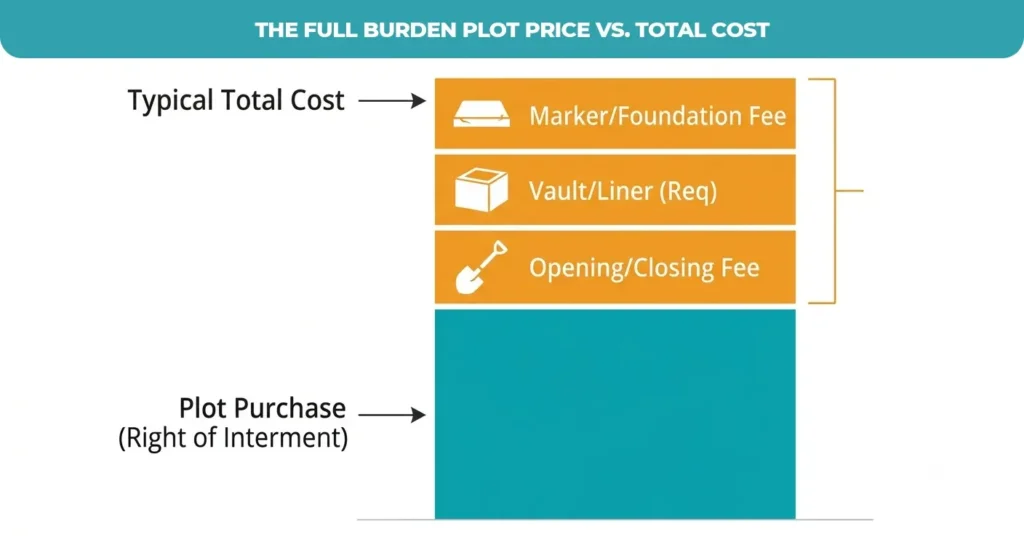
The burial plot price itself is rarely the final number. Families are regularly surprised by additional fees that can double or triple the initial quote. Expect to budget for:
- Opening and closing fees: the cost for the cemetery to excavate and backfill the grave ($600–$1,500+, depending on location and day of the week)
- Vault or liner requirements: Many cemeteries mandate a concrete grave liner or burial vault around the casket, which is not included in the plot price
- Foundation fees: the charge for setting a headstone or grave marker on a concrete base
Request a full itemized price list similar to the required General Price List at funeral homes under the FTC Funeral Rule from any cemetery before you commit.
Pro Tip: Visit the cemetery on a weekday. Many cemeteries charge a premium “overtime” fee for openings and closings performed on weekends, holidays, or late afternoons. Scheduling a weekday interment can save $200–$500.
Legal Rights and Cemetery Plot Ownership
Right of Interment vs. Real Property
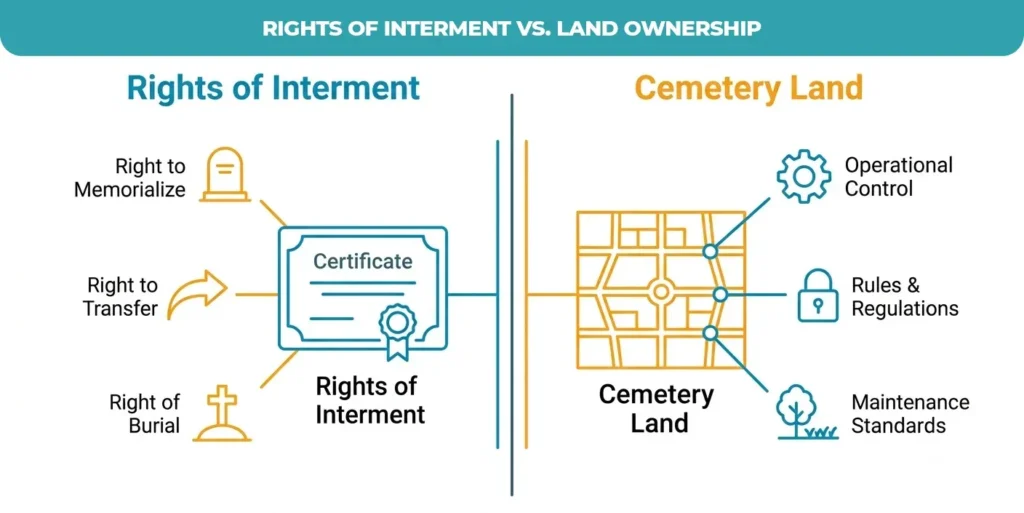
This distinction matters legally. A “Certificate of Interment Rights” (or similarly named document) is what you receive at closing, not a land deed. Your rights include:
- The exclusive right to authorize interments in that space
- The right to place an approved memorial marker
- The right to transfer your interment rights to a third party (subject to cemetery rules and fees)
Because you do not own the land, the cemetery retains authority over its rules, maintenance standards, and certain aesthetic requirements.
Transferability: Can You Sell or Pass Down a Plot?
Most burial rights are transferable. If you no longer need a plot you have purchased, you typically have three options:
- Sell to a third party through a burial plot resale broker or directly.
- Transfer to a family member (often at little or no cost, depending on cemetery policy).
- Offer back to the cemetery, some cemeteries will repurchase at a fraction of the original price.
Note that cemeteries rarely guarantee resale prices, and the resale market for burial plots is illiquid. Pre-need planning is primarily about securing a space and current pricing, not investment return.
How to Choose the Right Cemetery
Accessibility and Proximity
In my experience, families underestimate how often they will visit a gravesite, especially in the years immediately following a death. Consider:
- Driving distance from where family members currently live (not where they live today, but where they are likely to live in 10–20 years)
- Availability of public transit for family members who do not drive
- Parking, accessibility for elderly visitors, and paved walkways
Evaluating Grounds Maintenance and Financial Stability
Walk the grounds. The condition you see today reflects the quality of care you can expect in the future. Look for:
- Even, well-maintained turf without eroded graves or sunken markers
- Readable, upright headstones in older sections (a sign of stable, long-term care)
- Functioning drainage and roadways
You can also ask whether the cemetery is publicly owned (municipal or county), religiously affiliated, or privately operated. Ask to see their most recent annual report or endowment fund balance. A healthy endowment fund is the primary guarantee of perpetual care.
Religious and Cultural Affiliation
Denominational cemeteries, those affiliated with a specific church, synagogue, mosque, or religious organization, may restrict burial to members of that faith. They often have specific rules regarding funeral rites, monument styles, and interment procedures. Non-sectarian or secular cemeteries are open to all faiths and generally have fewer restrictions.
Pro Tip: If you are considering a faith-affiliated cemetery but are not a current member of that congregation, ask directly about membership requirements for burial eligibility. Some require documented membership for a minimum number of years prior to purchase.
Pre-Need vs. At-Need Purchases
Financial Benefits of Pre-Need Planning
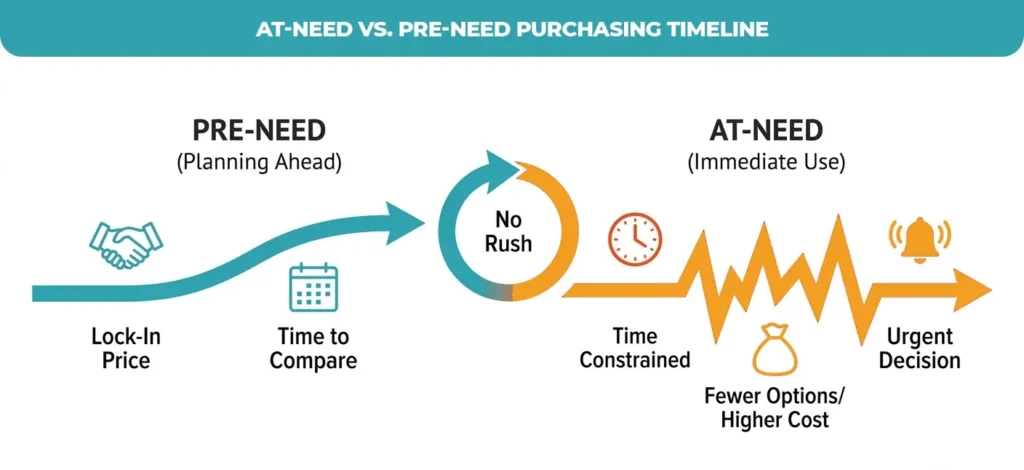
Cemetery plot prices have risen steadily in line with land values and operational costs. Families who purchase plots in advance avoid price inflation and gain several financial advantages:
- Price lock-in: the price you pay today is the price that is honored, regardless of future increases
- Time to comparison shop: at-need purchases happen under time pressure, which limits negotiation and research
- Potential installment payment plans: Many cemeteries offer financing for pre-need purchases
Emotional Benefits
The conversation about burial wishes is difficult, but having it in advance is a genuine act of love. Families who have not pre-planned consistently report that making funeral and burial decisions within days of a death is one of the most overwhelming experiences of their lives. Having a plot already secured removes one major decision from an already difficult time.
Conclusion
Purchasing a burial plot is not a morbid exercise; it is a practical, generous act that removes an enormous burden from your family at their most vulnerable moment. When you understand plot types, navigate costs with clear eyes, and know your legal rights, you provide your family with the gift of clarity.
Purchasing a burial plot is a practical, generous act that spares your family unnecessary burden during an already difficult time. By securing your arrangements now, you ensure your wishes are honored and your legacy is protected. Premier Services Agency today for expert guidance in navigating your options and securing peace of mind for your loved ones.
Frequently Asked Questions
What is the average cost of a burial plot in a cemetery?
Average prices range from $1,000 to $4,000 for a single space in private cemeteries, excluding additional fees. High-demand metropolitan areas can see prices exceed $10,000 to $25,000 for these plots.
What is the difference between a cemetery plot and a burial plot?
These terms are interchangeable in everyday usage. A “cemetery plot” refers to a space on the property, while “burial plot” describes that same space in the context of its intended use.
Is buying a burial plot a good idea?
Yes, pre-need planning is a financially and emotionally sound decision. You lock in current pricing, eliminate guesswork for grieving family members, and ensure your final wishes are clearly documented and preserved.
When you buy a burial plot, how long do you have it for?
In perpetual care cemeteries, burial rights are held in perpetuity, meaning there is no expiration date. The space remains permanently yours and belongs to your heirs, as is the modern standard.