

Introduction
Planning a funeral ceremony is one of the most emotionally demanding tasks a family will ever face. This guide navigates every stage of the process, from the initial arrangements following a death to selecting between burial and cremation, to help families create a service that is authentic, affordable, and a true tribute to the person being remembered.
A funeral ceremony provides mourners with a structured way to acknowledge their loss, express grief, and begin the process of adjusting to life without their loved one. By offering a defined role, a specific time, and a shared language for pain, these rituals serve as a psychological “container” that helps make overwhelming emotions feel more manageable.
Understanding the Purpose of a Funeral Ceremony
A funeral ceremony gives mourners a structured way to acknowledge loss, express grief openly, and begin adjusting to a world without the person who died. Grief researchers describe ritual as a psychological “container” that makes overwhelming emotion feel manageable, which is why nearly every human culture has developed one.
The Emotional Significance
Grief and bereavement researchers have consistently found that structured mourning rituals help people process loss by giving them a defined role, a specific time, and a shared language for pain that otherwise feels formless. Studies on “continuing bonds” theory, a widely cited framework in bereavement psychology, suggest that ceremonies which allow mourners to speak to or about the deceased can ease the transition from acute grief to long-term adaptation.
Celebrating vs. Mourning
A traditional funeral ceremony centers on solemnity, ritual, and often religious doctrine about death and the afterlife. A Celebration of Life shifts the tone toward gratitude, storytelling, and joy, frequently swapping dark clothing and hymns for favorite music and personal anecdotes. Neither format is more valid; the right choice depends on the deceased’s personality and the family’s comfort with formality.
Community Support
Funeral ceremonies also function as a practical support network. Friends, coworkers, and extended family gather in one place, which makes it easier to share memories, coordinate meals and childcare, and reassure grieving relatives that they are not alone in their loss.
Types of Funeral Services and Ceremonies
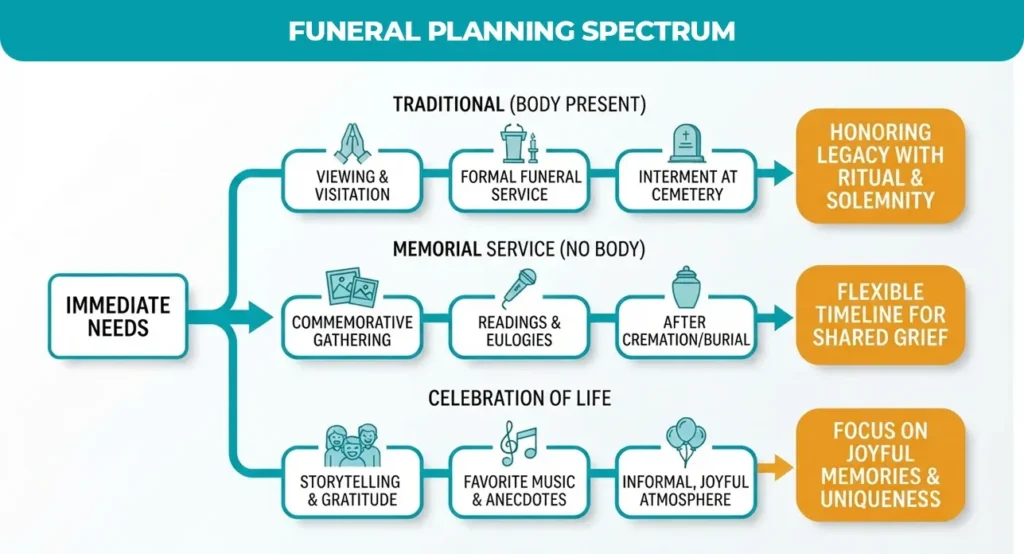
Funeral ceremonies generally fall into five categories: traditional funerals, graveside services, memorial services, celebrations of life, and direct cremation with a later memorial. Each answers the question “Is a funeral a ceremony?” differently, since some involve the body directly and others are purely commemorative gatherings held afterward.
Traditional Funerals
A traditional funeral ceremony typically includes a viewing or visitation, a formal service with readings and eulogies, and interment at a cemetery. The body is usually present in a casket throughout, and the sequence follows a set order that funeral directors can help families schedule within a few days of death.
Graveside Services
A graveside service moves the entire ceremony to the cemetery, skipping a separate chapel or church visitation. Attendees stand around the grave while a brief reading, prayer, or personal tribute takes place immediately before or during the burial, a common choice for smaller families or military funeral ceremony traditions, which often include a folded flag presentation and a bugle tune played at the graveside.
Memorial Services
A memorial service is held without the body present, usually after cremation or burial has already occurred, and can take place weeks or even months later. This flexibility makes memorial services popular for families waiting on out-of-town relatives or planning a larger celebration of life.
Celebration of Life
A celebration of life trades traditional funeral ceremony formality for storytelling, favorite music, and sometimes a party-like atmosphere at a restaurant, garden, or the deceased’s own backyard. Photo displays, open-mic memory sharing, and themed decor tied to a hobby are common personalization choices.
Direct Cremation
Direct cremation is the simplest and typically least expensive option: the body is cremated shortly after death with no preceding service, and families hold a memorial gathering later on their own timeline. This approach has grown steadily because it separates the logistical urgency of body disposition from the emotional timeline of saying goodbye.
Selecting the Venue
Religious venues, such as churches, synagogues, mosques, and temples, suit families who want the ceremony rooted in doctrine and clergy-led ritual. Secular venues, including funeral home chapels, community halls, and gardens, offer more flexibility for a celebration of life or a blended ceremony that mixes spiritual elements with personal tributes.
Personalizing the Funeral Ceremony
Personalization turns a generic service into a true reflection of the person who died, and the most memorable funeral ceremony examples almost always include at least one element that the family created themselves rather than selected from a standard package.
Meaningful Tributes
Choose music, scripture, or poetry that the deceased loved rather than defaulting to generic funeral standards. A favorite song played during the visitation or a poem read by a grandchild often resonates more than an unfamiliar hymn.
Eulogies
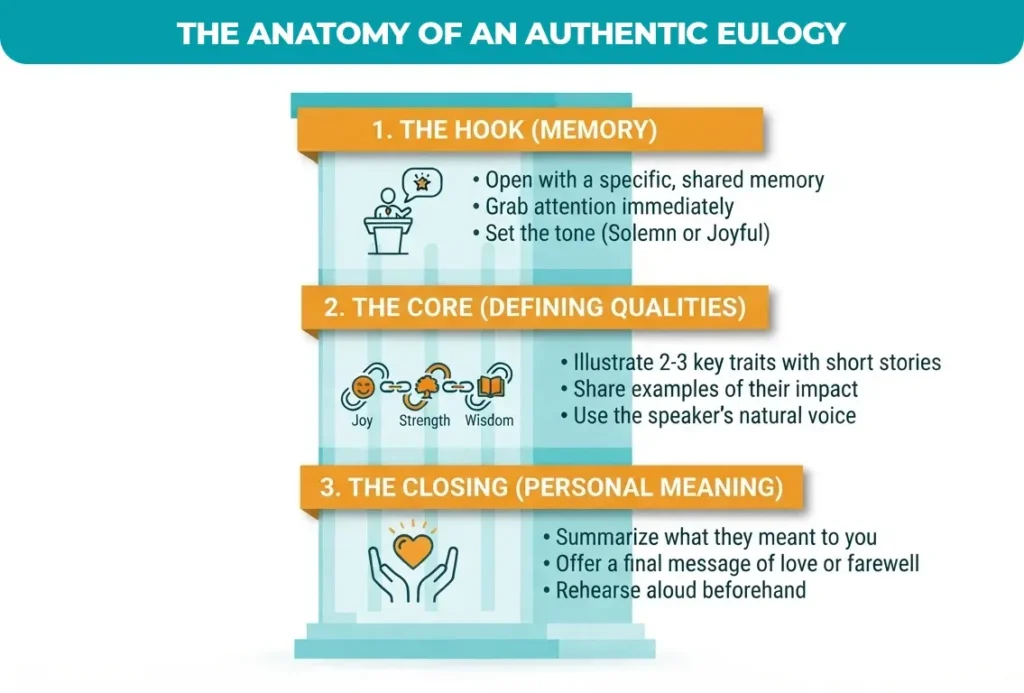
An effective eulogy opens with a specific memory, moves through two or three defining qualities illustrated by short stories, and closes with a direct statement of what the person meant to those left behind. Writing it in the speaker’s natural voice and rehearsing it aloud once beforehand prevent the delivery from feeling stiff.
Interactive Ceremonies
Rituals like flower scattering, a dove release, planting a memory tree, or lighting individual candles give guests an active role instead of a passive one. Some traditions also include a formal crown ceremony funeral element, in which a symbolic crown or wreath is placed to honor a person’s role within a fraternal order, community group, or family lineage.
Navigating Cultural and Religious Funeral Traditions
Funeral customs vary widely by faith and culture, and the same underlying goal, honoring the dead with dignity, takes very different outward forms depending on tradition.
Respecting Diversity
- Christian: viewing, eucharist or communion in some denominations, burial or cremation, graveside committal
- Jewish: burial as soon as possible, simple wooden casket, seven-day shiva mourning period afterward
- Islamic: burial within 24 hours where possible, body washed and shrouded (ghusl and kafan), no cremation
- Hindu: cremation is standard, often within 24 hours, followed by ash scattering in a sacred river
- Buddhist ceremony funeral traditions: chanting, incense offerings, and a period of mourning that can extend 49 days, reflecting beliefs about the soul’s transition between rebirths
- Secular funeral ceremony: no religious doctrine; structure is built entirely around the family’s own values and the deceased’s personality
Communication
Send guests clear information about dress code, any customs specific to the faith (such as head coverings or shoe removal), and whether flowers or donations are preferred. A short paragraph on the invitation or obituary prevents confusion and helps guests from outside the tradition participate respectfully.
Financial Considerations and Planning Ahead
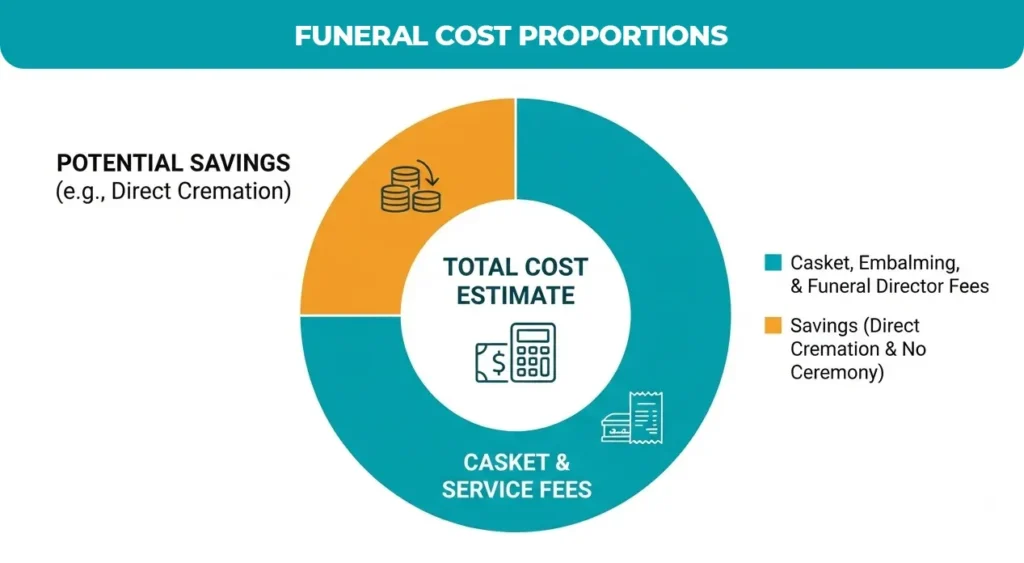
Funeral costs vary enormously by region and service type, but industry data consistently shows that caskets, staff service fees, and venue costs make up the largest share of a traditional funeral budget, while direct cremation remains the lowest-cost option.
Budgeting
A full-service traditional funeral with viewing, ceremony, and burial commonly costs several thousand dollars once the funeral home’s basic services fee, casket, embalming, and burial plot are added together, according to National Funeral Directors Association (NFDA) industry surveys. Direct cremation without a service is typically a small fraction of that total.
Pre-Planning
Pre-planning a funeral lets a person choose their own service style, venue, and budget in advance, which spares surviving family members from making high-pressure decisions while grieving. Many funeral homes offer pre-need contracts that lock in today’s prices against future inflation.
Funeral Insurance
Funeral or final-expense insurance pays a lump sum to cover service costs, which can prevent a family from covering an unexpected bill out of pocket during an already difficult time. Policies are generally smaller and easier to qualify for than standard life insurance.
Conclusion
Ultimately, the most profound funeral ceremonies prioritize celebrating the unique life lived over the finality of death. By embracing authenticity rather than rigid convention, families can craft a deeply meaningful tribute that resonates with the soul of the departed and provides true solace to those left behind.
There is no singular “correct” format; whether you choose a traditional service, a quiet graveside gathering, or a vibrant, joyful celebration of life, the impact remains the same. Move at your own pace, lean on expert guidance, and trust your instincts to design a lasting legacy that honors your loved one with dignity and grace.