
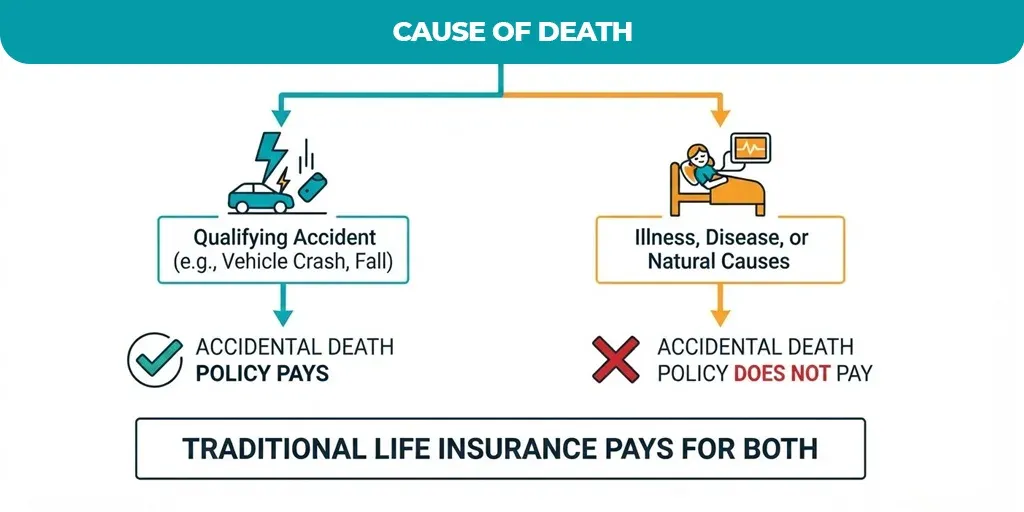
When an insured person passes away as a direct result of a covered accident, like a vehicle crash, accidental death insurance provides a lump-sum death payment to a designated beneficiary fall, or a workplace incident. It differs from traditional life insurance because it generally does not pay if death results from illness, disease, or other natural causes. The National Association of Insurance Commissioners (NAIC) describes this coverage as a contract that pays a stated benefit for death or dismemberment caused by an accident. This guide explains how the coverage works, what it covers and excludes, what drives its cost, and how it compares with life insurance in 2026.
| Quick Answer Accidental death insurance pays a death benefit only when the insured’s death results directly from a covered accident, typically within a set time frame after the incident (often around 90 days, depending on the policy).It does not pay for deaths from illness, natural causes, or most excluded activities.Coverage amounts, exclusions, and eligibility rules vary by insurer, so reviewing the policy certificate before purchasing is essential. |
What Is Accidental Death Insurance?
A contract known as accidental death insurance provides a death benefit to a specified beneficiary following the insured’s demise in a covered accident. The NAIC defines this category of contract as one that pays a stated benefit for death or dismemberment caused by accident, defining an accident itself as an unexpected event without deliberate intent.
The policy’s specific terms determine whether a death qualifies. Coverage generally applies to accidental death rather than natural death, and the exact scope depends on the definitions, conditions, and exclusions written into that contract. Because terms vary between insurers, similarly marketed policies can pay out under different circumstances.
How Does Accidental Death Insurance Work?
- The applicant obtains an accidental death policy as an AD&D rider on a health, life, or group benefits plan, or as a stand-alone policy.
- The insured pays the required premium on the insurer’s schedule.
- The policy stays active as long as premiums are paid and coverage has not lapsed.
- If a qualifying accidental death occurs, the beneficiary files a claim with the insurer.
- The insurer reviews the claim against the policy’s definitions, conditions, and exclusions.
- If approved, the insurer pays the death benefit to the named beneficiary, usually as a lump sum.
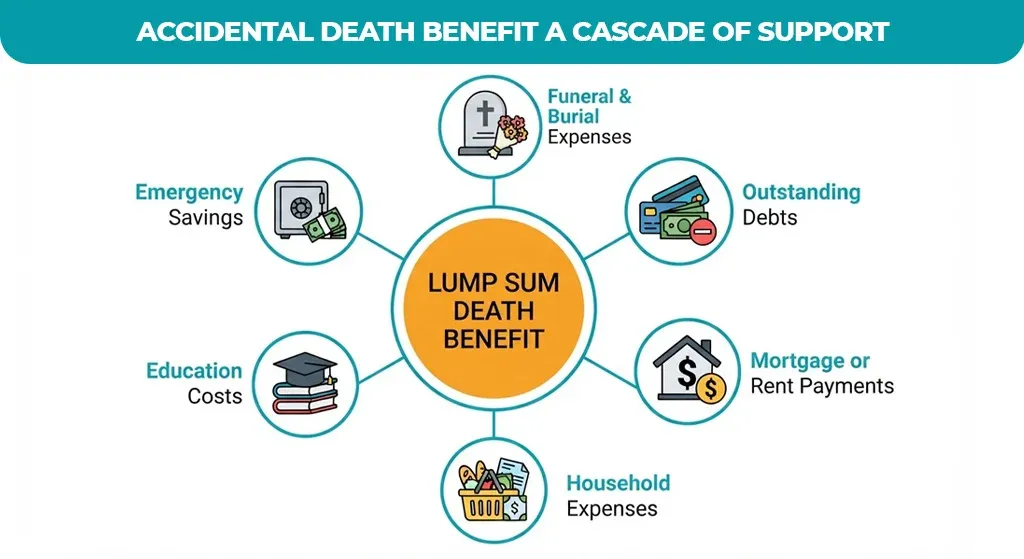
What Does the Accidental Death Benefit Pay For?
Because the benefit is paid directly to the beneficiary rather than restricted to a specific use, families can generally apply it toward whatever need is most pressing:
- Funeral and burial expenses
- Outstanding debts
- Mortgage or rent payments
- Household expenses
- Education costs
- Other financial obligations the family may face after a loss
What Does Accidental Death Insurance Cover?
Coverage depends on each insurer’s policy language, but this coverage is generally designed around:
- Fatal accidents that meet the policy’s definition of a covered accident
- Traffic or automobile accidents
- Workplace accidents
- Accidental injuries resulting in death within the policy’s specified time frame
- Other qualifying accidental events named in the contract
Not every accident automatically qualifies. Whether an incident is covered depends on the definitions and exclusions in the policy, so the certificate of coverage is the final authority, not marketing language.
Accidental Death vs. Accidental Dismemberment (AD&D)
In addition to providing a reward for death brought on by a covered accident, AD&D insurance may also provide a partial benefit for severe injuries, including the loss of a limb, sight, or hearing.
Accidental death insurance focuses primarily on the death benefit, though the terms are sometimes used interchangeably in the market. When comparing quotes, check whether dismemberment benefits are included or sold separately as a rider.
What Does Accidental Death Insurance Not Cover?
Exclusions are among the most important parts of any accidental death policy and can vary meaningfully between insurers. Commonly excluded circumstances include:
- Death from illness or disease
- Death from natural causes
- Suicide, depending on the policy’s terms and any contestability period
- Certain high-risk activities named in the contract
- Drug or alcohol-related circumstances, depending on policy language
- War or military-related situations in some policies
- Intentional self-inflicted injuries
- Other events specifically listed as excluded in the policy
Exclusions vary by policy and insurer. Always review the actual policy document or ask the insurer directly for a copy of the exclusions before assuming a specific scenario would be covered.
How Much Does Accidental Death Insurance Cost in 2026?
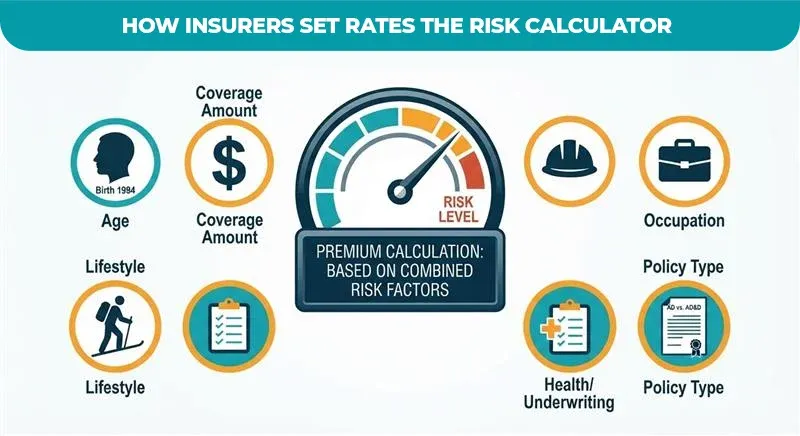
There is no single universal price, because premiums are calculated individually based on the applicant and the policy selected. Instead of relying on an average cost figure, it helps to understand the variables insurers use to set rates.
Factors That Affect Accidental Death Insurance Rates
- Age
- Coverage amount
- Occupation, including whether the job involves higher physical risk
- Lifestyle and activities
- Policy type, such as stand-alone coverage versus an AD&D rider
- Health or underwriting requirements, if the insurer applies them
- Optional riders added to the base policy
- The insurer itself, since pricing methodology differs across companies
- For an accurate figure, request quotes directly from insurers or a licensed agent, since rates change based on current underwriting practices.
How Much Coverage Do You Need?
Compare your household’s financial obligations against the resources already available to your family, then use the difference to estimate a reasonable coverage amount:
- Funeral and burial expenses
- Existing debts
- Income replacement needs
- Ongoing family expenses
- Remaining mortgage balance
- Children’s future education costs
- Emergency savings the family may need to draw on
Who Should Consider Accidental Death Insurance?
Accidental death insurance tends to fit specific situations rather than serving as a universal solution:
- People looking for affordable, supplemental protection alongside existing coverage
- Workers in higher-risk occupations who want additional accident-related protection
- Families seeking an added layer of financial protection
- People who already carry life insurance but want supplemental coverage on top of it
Who May Not Benefit From It?
Anyone looking for broad protection against both accidental and natural death should generally look toward traditional life insurance instead, since accidental death coverage does not respond to deaths from illness or natural causes.
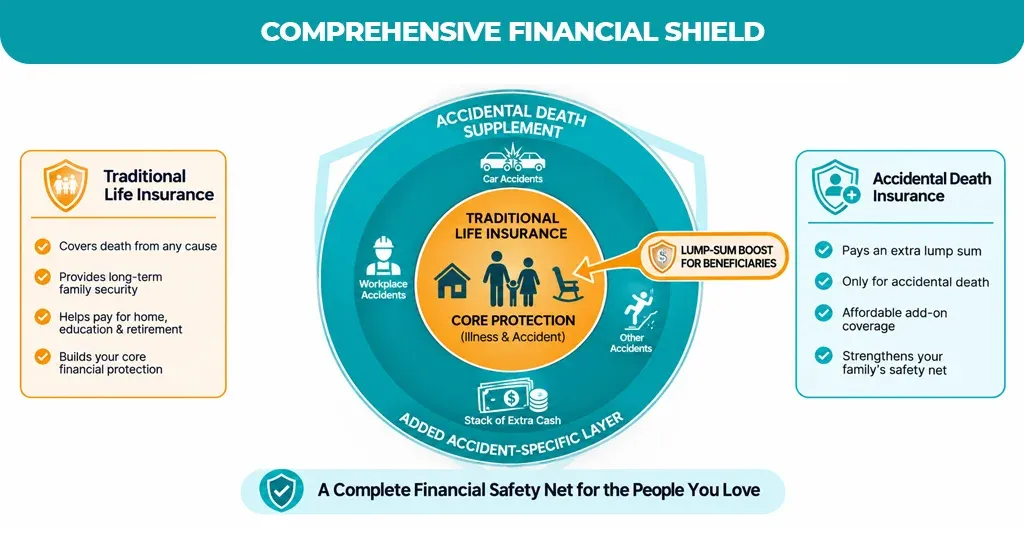
Accidental Death Insurance vs. Life Insurance
The two products are often confused because both pay a death benefit, but the scope of protection is different. The table below summarizes the core distinctions.
| Feature | Accidental Death Insurance | Traditional Life Insurance |
| Accidental death | Usually covered if the policy’s definitions are met | Generally covered |
| Natural death or illness | Usually not covered | Generally covered |
| Premium | Often lower for the coverage amount | Varies by age, health, and policy type |
| Medical underwriting | Often simplified or not required | Varies; many policies require underwriting |
| Coverage purpose | Supplemental protection for qualifying accidents | Broader financial protection |
| Cash value | Typically none | May exist with certain permanent policies |
Pros and Cons of Accidental Death Insurance
Pros
- Can provide additional financial protection for the family
- May be relatively affordable compared with the coverage amount offered
- Can supplement an existing life insurance policy
- May offer a simplified application process for some products
- Provides a defined death benefit specifically for qualifying accidents
Cons
- Does not generally cover death from natural causes or illness
- Policy exclusions can meaningfully limit when a benefit is paid
- Is not a substitute for comprehensive life insurance in most financial plans
- Benefits depend entirely on the incident meeting the policy’s specific requirements
- Coverage terms and exclusions vary between insurers, making comparisons important.
How to Buy Accidental Death Insurance
- Determine your coverage needs by calculating the financial obligations your family could face.
- Compare available policies, looking beyond price to weigh exclusions and benefits side by side.
- Review eligibility, including age limits, occupation, and any application or underwriting requirements.
- Read the exclusions closely, since this is especially important with accidental death coverage.
- Select your beneficiary and confirm the information on file is accurate and current.
- Review the finalized policy to confirm the benefit amount, premium, effective date, and any limitations.
Get Help Finding the Right Coverage With Premier Services Agency
Choosing between accidental death insurance, AD&D coverage, and life insurance depends on your household’s obligations, risk factors, and existing coverage. Premier Services Agency can help you:
- Explore available insurance options suited to your situation
- Understand the differences between accidental death, AD&D, and life insurance
- Compare coverage amounts and exclusions based on your needs
- Get guidance from a licensed professional before choosing a policy
Speaking with an insurance professional before you buy can help you avoid gaps in coverage and choose a policy that matches your household’s needs.
Conclusion
Accidental death insurance pays a benefit when a covered accident results in death, offering an added layer of financial protection for beneficiaries. It does not match the broad protection of traditional life insurance, since it excludes natural death and depends on specific policy definitions.
Compare premiums, benefit amounts, exclusions, and eligibility requirements across insurers, since the right coverage depends on your individual financial circumstances. Premier Services Agency can walk you through available policies and help you request a quote suited to your household.