

A green burial returns a body to the earth without embalming chemicals, metal caskets, or concrete vaults, allowing natural decomposition to take place. It is one of the fastest-growing choices in American death care, and understanding how it works, what it costs, and where it is available can help you plan with confidence rather than uncertainty.
Consumer interest reflects that shift. According to the National Funeral Directors Association’s (NFDA) 2026 Consumer Awareness and Preferences Report, 61.4% of Americans said they would be interested in exploring green funeral options, up from 55.7% the previous year. This guide walks through the definition, history, legal framework, and cost of green burial, and compares it with the newer option of human composting.
| Quick AnswerA green burial (or natural burial) places an un-embalmed body directly into the earth in a biodegradable casket or shroud, without a concrete vault, so it decomposes naturally. It is legal in all 50 states, though not every cemetery offers it, and it typically costs between $2,000 and $5,000 less than a conventional funeral with burial. |
| Key TakeawaysGreen burial avoids embalming fluid, metal caskets, and concrete vaults, letting the body decompose naturally.The Green Burial Council (GBC) recognizes three cemetery types: hybrid, natural burial ground, and conservation burial ground.Green burial is generally legal nationwide, but availability depends on whether a local cemetery permits it.Natural organic reduction (human composting) is a separate, above-ground process now legal in 14 states as of 2026.A green burial typically costs $2,000–$5,000, compared with an NFDA-reported 2023 median of $8,300–$9,995 for a funeral with viewing and burial. |
What Is a Green Burial?
A green burial is a method of caring for the dead with minimal environmental impact. The Green Burial Council defines it as a practice that aids in the conservation of natural resources, reduces carbon emissions, protects worker health, and restores or preserves habitat.
That definition, set by the Green Burial Council (GBC), the leading North American certification body for natural death care, separates green burial from vague marketing claims of being “eco-friendly.” A body must meet specific, verifiable criteria to qualify.
Core characteristics of a green burial include:
- No standard chemical embalming. Bodies are cooled with dry ice, refrigeration, or non-toxic, GBC-approved fluids instead.
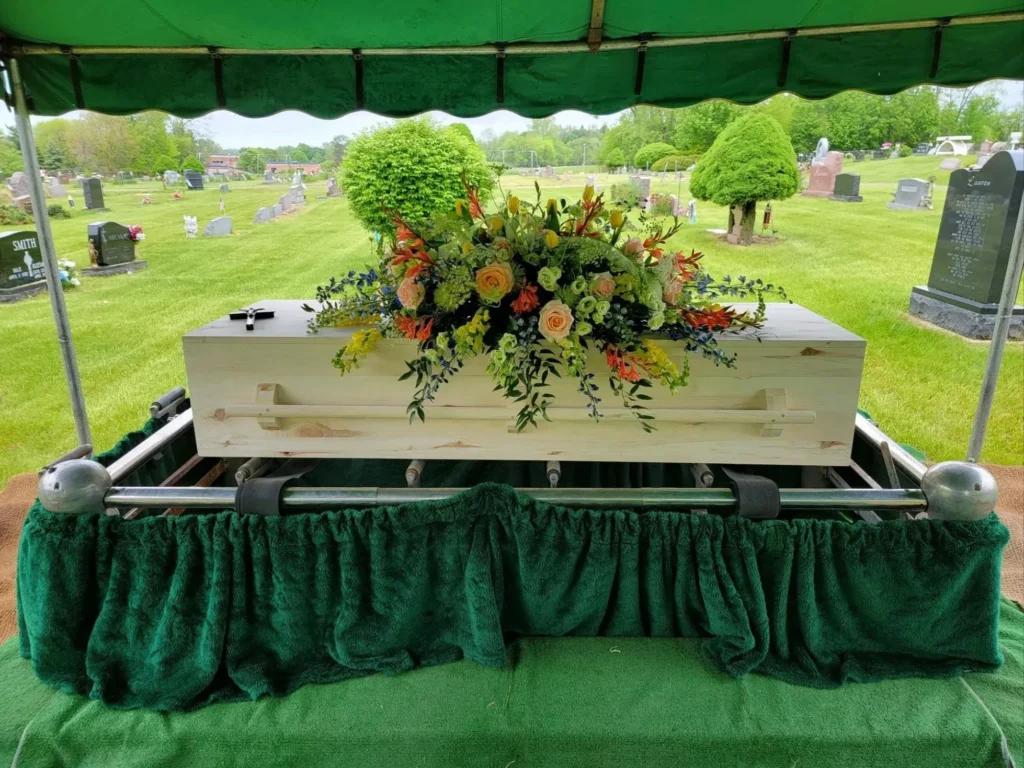
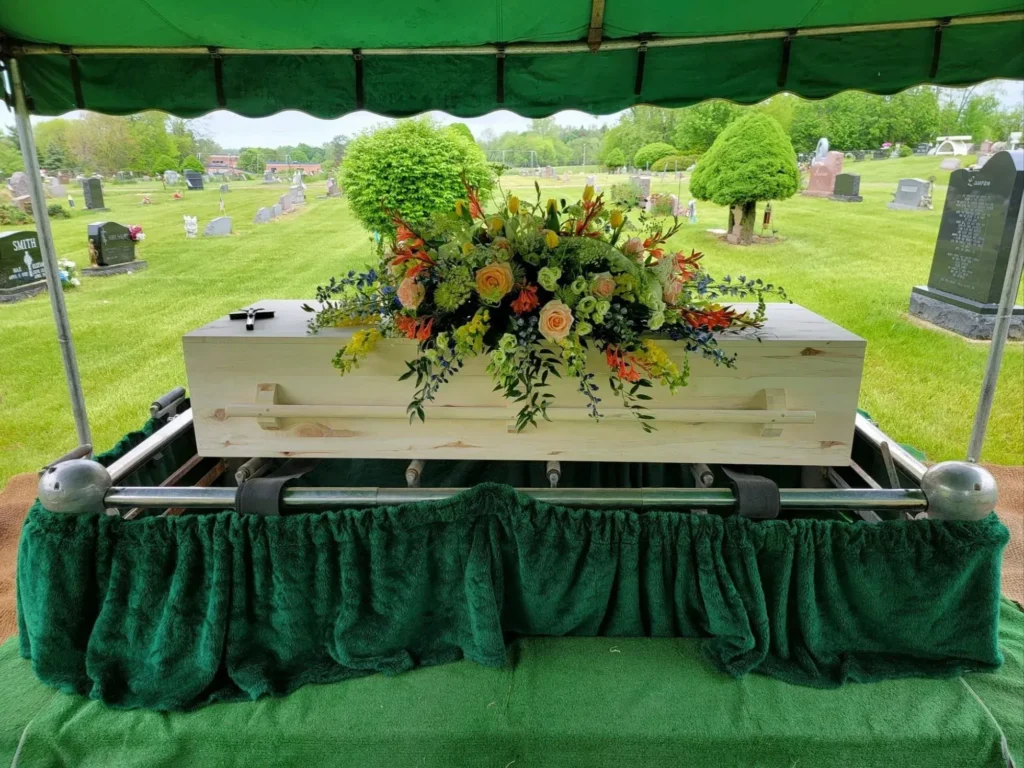
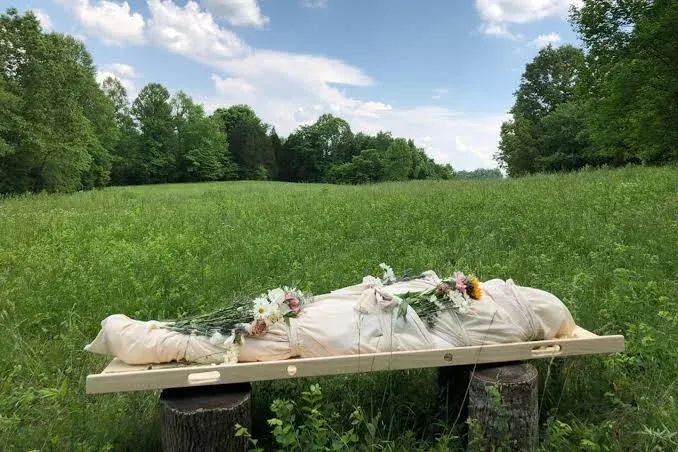
- Biodegradable containers, such as caskets made from wicker, untreated wood, or cardboard, or a simple burial shroud.
- No concrete vault, grave liner, or partitioned box, which allows the body direct contact with soil.
- Shallower burial depth, typically 3 to 4 feet, where oxygen and microbial activity support natural decomposition.
A Brief History of Green Burial
Green burial is not a new invention. Before the mid-19th century, burial without embalming or industrial materials was simply how most Americans laid their dead to rest, often within days, in family plots or churchyards.
How the Civil War Changed American Burial
That changed during the Civil War, when hundreds of thousands of soldiers died far from home, and families wanted their bodies returned for burial. Embalming, pioneered on a wide scale by figures such as Dr. Thomas Holmes, offered a way to preserve remains for the journey. According to the National Museum of Civil War Medicine, this wartime necessity established the techniques and business model that became the modern American funeral industry.
The Modern Green Burial Revival
The contemporary green burial movement traces to 1998, when Billy and Kimberley Campbell opened Ramsey Creek Preserve in Westminster, South Carolina, the nation’s first conservation burial ground. In 2006, Ramsey Creek partnered with the land trust Upstate Forever to place a permanent conservation easement on the property, earning certification from the Green Burial Council as the first Certified Conservation Burial Ground in the United States. The preserve, now roughly 78 acres with 75 dedicated to conservation burial, became a model that inspired natural cemeteries across the country.
Green Burial Cemeteries and Conservation Options
The Green Burial Council certifies three distinct categories of burial grounds, each offering a different level of environmental protection.
Hybrid Cemeteries
A hybrid cemetery is a conventional cemetery that sets aside a specific section for green burials, allowing un-embalmed bodies and biodegradable caskets without requiring a vault in that section. This is currently the most common way families access green burial, since it does not require an entirely separate facility.
Natural Burial Grounds
A natural burial ground or natural burial park is a standalone cemetery dedicated exclusively to green burial. These sites typically forgo upright headstones in favor of flat native stone markers, tree plantings, or GPS coordinates, preserving a wooded or meadow landscape rather than a manicured lawn.
Conservation Burial Grounds
Conservation burial grounds represent the highest standard. Burial fees on this land directly fund habitat restoration and permanent land conservation, often through an easement held by a nonprofit land trust, as Ramsey Creek Preserve did with Upstate Forever. This model ties the burial fee directly to long-term ecological stewardship rather than routine cemetery maintenance.
What’s Allowed in a Green Burial?
Green burial standards focus on three areas: preservation methods, container materials, and memorialization.
- Embalming: Standard chemical embalming with formaldehyde-based fluid is not used. Providers rely on dry ice, refrigeration, cooling boards, or GBC-approved non-toxic post-mortem fluids to manage timing before burial.
- Caskets and shrouds: Containers must be made from readily biodegradable materials, such as untreated wood, wicker, cotton, wool, or silk, without metal hardware, exotic hardwoods, or synthetic glues.
- Vaults and liners: Concrete vaults, grave liners, and partitioned boxes are prohibited at certified natural and conservation sites, since they block the body’s contact with soil.
- Markers: Upright granite headstones are typically replaced with flat native stones, engraved rocks, native plantings, or GPS-based location records.
Because there is no embalming to slow the natural process, green burial generally happens on a faster timeline than a conventional funeral, often within a few days of death. Specific rules on preservation methods, transport, and burial depth are set at the state or local health department level, so it is worth confirming requirements with a GBC-certified provider or cemetery in advance.
How Much Does a Green Burial Cost?
Cost is one of the most common reasons families consider green burial. Because it eliminates embalming, an elaborate casket, and a vault, a green burial generally costs a fraction of a conventional funeral with burial.
| Disposition Method | Typical Cost Range | Source |
| Direct cremation (no service) | $1,000 – $2,500 | Consumer funeral-cost surveys |
| Green burial (biodegradable casket/shroud, natural cemetery) | $2,000 – $5,000 | Consumer funeral-cost surveys |
| Natural organic reduction (human composting) | $4,000 – $5,500 | Consumer funeral-cost surveys |
| Funeral with viewing and cremation | $6,280 (2023 median) | NFDA 2023 General Price List Study |
| Funeral with viewing and burial (no vault) | $8,300 (2023 median) | NFDA 2023 General Price List Study |
| Funeral with viewing and burial (with vault) | $9,995 (2023 median) | NFDA 2023 General Price List Study |
Green Burial vs. Human Composting (Natural Organic Reduction)
Green burial and human composting are often grouped together as “green” options, but they are legally and physically distinct processes.
How They Differ
Green burial places an intact, un-embalmed body directly into the ground, where it decomposes in place over months to years.
Human composting, formally called natural organic reduction, is an above-ground process. The body is placed in a vessel with organic material such as wood chips, straw, and alfalfa and kept at a controlled temperature so microbes break it down. According to Britannica, the process takes roughly a month, after which the remaining bone fragments are pulverized and the resulting soil cures for two to four additional weeks, yielding less than a cubic meter of soil that can be returned to the family.
Legal Status
Green burial itself is not illegal anywhere in the country. Because it does not require special legislation beyond existing burial and health codes, families can generally arrange it wherever a willing cemetery exists, though certified green cemeteries and natural burial grounds remain limited in some regions.
Human composting requires its own enabling legislation and is far more geographically limited. As of 2026, natural organic reduction is legally authorized in 14 states: Washington (the first, in 2019), Colorado, Oregon, Vermont, California, New York, Nevada, Arizona, Maryland, Delaware, Minnesota, Maine, Georgia, and New Jersey, according to tracking by the Order of the Good Death and state legislative reporting. Additional states have introduced bills that have not yet passed, so the list continues to change.
How Long Decomposition Takes
In a green burial, the Green Burial Council’s own FAQ notes that, depending on soil type, oxygen availability, and moisture, a body typically loses the majority of its soft tissue within about six weeks and reaches complete soft-tissue decomposition within roughly two years. Skeletal remains can take up to 20 years to fully break down in moist, fertile soil. Human composting compresses this timeline dramatically, converting a body into usable soil within a matter of weeks rather than years.
Pros and Cons of Choosing a Green Burial
The Advantages
- Lower cost: Green burial typically avoids the expense of embalming, metal caskets, and concrete vaults, which are among the largest line items in a conventional funeral.
- Reduced environmental impact: Without embalming fluid, non-biodegradable caskets, or vaults, a green burial allows the body and its container to return to the soil rather than persist as buried waste.
- A natural, often comforting setting: Many families describe conservation burial grounds and natural burial parks as peaceful, park-like spaces that provide comfort distinct from a traditional cemetery lawn.
The Disadvantages
- Limited availability: Certified conservation cemeteries and natural burial grounds are not evenly distributed, and some families may need to travel to reach one.
- Faster timeline: Without embalming, burial typically needs to happen within a few days, which can complicate planning a service or waiting for out-of-town relatives.
- Fewer permanent markers: Families who want a traditional, easily located headstone may find flat stones, native plantings, or GPS coordinates less familiar or harder to visit over time.
- Possible family disagreement: Relatives accustomed to conventional viewings, embalming, and upright monuments may need time to become comfortable with a different approach.
Planning Ahead for a Green Burial
Choosing how you or a loved one returns to the earth is a deeply personal decision, and it works best when it is made ahead of time rather than during a crisis. Whether the choice is a conservation burial, a hybrid cemetery section, human composting where available, or a traditional plan, documenting those wishes clearly and arranging the funds to carry them out spares your family from having to guess or pay out of pocket during an already difficult time.
Premier Services helps families think through those decisions in plain language, comparing options and coverage so the plan you put in place today actually reflects what you want. To start building a plan around your own end-of-life wishes, get a personalized quote from Premier Services Agency and take that step toward peace of mind for the people you love.