


What Does “Cost of Cremation vs Burial” Actually Compare?
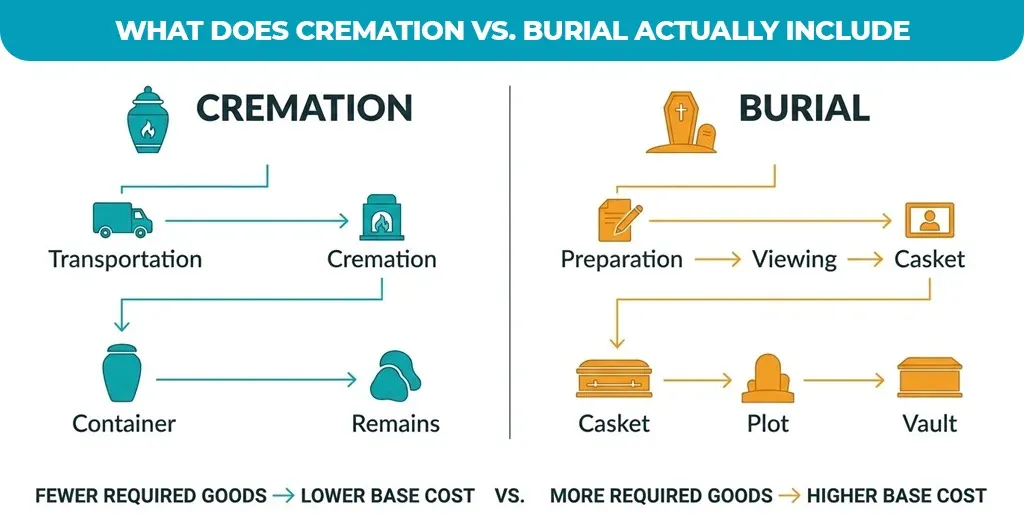
Comparing the cost of cremation vs burial means comparing two different sets of required goods and services, not just two prices on a page. Cremation reduces the body to ashes in a specialized chamber, so it does not require a burial-grade casket, a cemetery plot, or a vault. Burial preserves the body for viewing and permanent interment, which brings in embalming, a casket built for burial, a cemetery plot, and, in most cemeteries, a vault or grave liner to keep the ground from settling. Every dollar of the cost gap between the two options traces back to that difference in required goods.
What a Typical Cremation Includes
- Transportation of the deceased to the crematory
- A cremation container (a casket is not legally required for cremation)
- The cremation process itself
- Return of the remains in a temporary container or an urn of your choosing
- Certified copies of the death certificate
What a Typical Burial Includes
- Transportation and preparation of the deceased, generally including embalming if there is a viewing
- A viewing or visitation period at the funeral home
- A funeral or graveside service
- A casket built for burial
- A cemetery plot, plus opening and closing the grave
- A burial vault or grave liner, required by most (though not all) cemeteries
Average Cost of Cremation vs Burial in the US (2026)
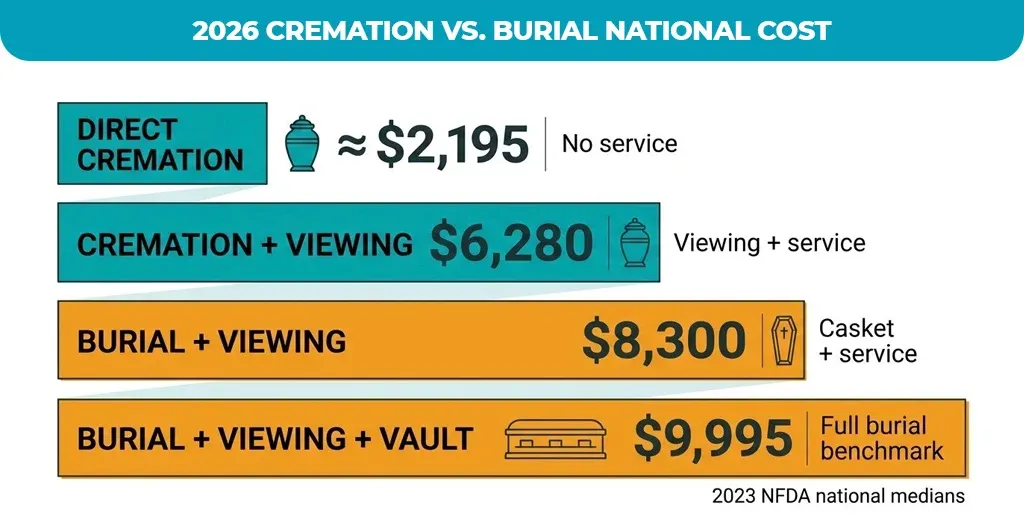
The most reliable national benchmark for the average cost of burial vs cremation in the US in 2026 is still the NFDA’s 2026 General Price List Study, since NFDA has not published a newer full national median as of this writing. Between 2021 and 2023, the burial median rose 5.8% (from $7,848 to $8,300), and the cremation median rose 8.1% (from $5,810 to $6,280), so 2026 prices at an individual funeral home are likely somewhat higher than the 2023 figures below.
Service Type | NFDA 2023 National Median | What It Includes |
Direct cremation (no service) | ≈ $2,195 average | Transportation, cremation, container, return of remains |
Cremation with viewing and service | $6,280 | Embalming, viewing, service, cremation, urn |
Burial with viewing (no vault) | $8,300 | Embalming, viewing, service, casket |
Burial with viewing and vault | $9,995 | Same as above, plus a burial vault |
Cost of Cremation vs Burial in California
California pricing sits close to the national NFDA averages. State-level data compiled from NFDA and Funeralocity pricing puts a full-service burial in California at about $7,835 and a full-service cremation at about $5,812. Direct cremation, with no viewing or service, averages about $1,619 in California, while direct burial averages about $4,677 (Choice Mutual, state funeral cost data). As with Texas, coastal and major metro markets such as Los Angeles and San Francisco typically price above these statewide averages.
Cost of Cremation vs Casket Burial
The casket is one of the largest single line items separating the cost of cremation vs casket burial. A cremation container, used only to hold the body during the cremation process, typically costs $50 to $1,000, since it does not need to meet burial-grade construction standards. A casket built for burial is a different product entirely, designed for viewing and long-term interment, and commonly costs $2,000 to $10,000 or more depending on the material and craftsmanship. Under the FTC Funeral Rule, a funeral home cannot require a casket for a direct cremation, and it must accept a casket or container purchased elsewhere without charging a handling fee.
Cost of Green Burial vs Cremation
Green burial is a middle-ground option that skips embalming and metal caskets in favor of a biodegradable container and a natural burial ground. Green burial typically costs $2,000 to $5,000, which is less than a traditional burial but generally still costs more than a direct cremation, since it still involves a cemetery plot and interment fees that cremation does not require. Families comparing the cost of green burial vs cremation should treat green burial as a lower-impact alternative to traditional burial rather than a lower-cost alternative to cremation.
What Drives the Cost Difference Between Cremation and Burial
- Casket or container choice: a burial-grade casket costs substantially more than a cremation container
- Whether a vault or grave liner is required by the cemetery
- Whether embalming and a viewing are part of the service
- Local market funeral and cemetery pricing varies significantly by city and state
- Direct service vs. full traditional service, including flowers, printed materials, and travel for out-of-town family
- Cemetery property cost, which is billed separately from the funeral home’s charges
How to Reduce Cremation or Burial Costs
Request an itemized General Price List from at least two or three providers before committing; funeral homes are legally required to provide one under the FTC Funeral Rule. Buy only the individual goods and services you want rather than accepting a bundled package. Consider direct cremation or direct burial, then hold a separate memorial or celebration of life on your own timeline.
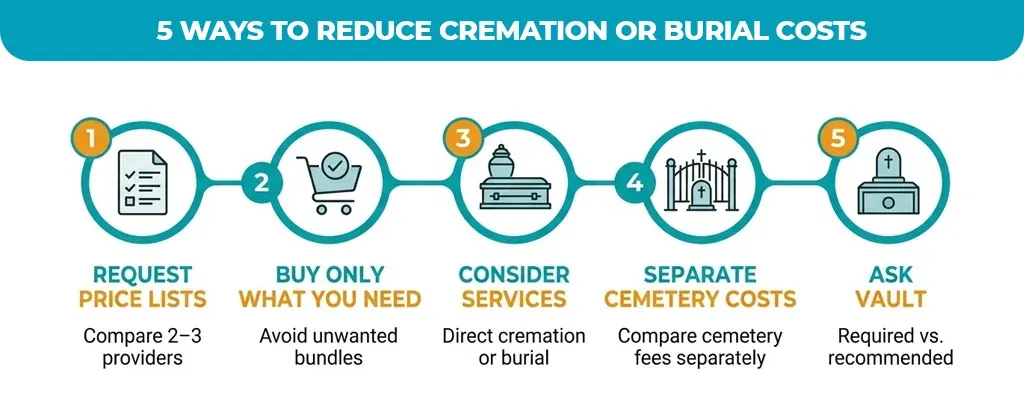
Compare cemetery costs separately from funeral home costs, since they are billed by different businesses. Ask whether a vault is actually required by the cemetery, or only recommended. Pre-plan and consider final expense coverage or a funeral trust to lock in costs ahead of future price increases
Conclusion
The cost comparison of cremation vs burial ultimately comes down to which required goods and services each option brings with it: cremation avoids the casket, plot, and vault that make burial more expensive, while burial provides a permanent gravesite that cremation does not. Neither option is right or wrong; the better fit depends on your family’s budget, beliefs, and the kind of closure that matters most to them.
Deciding now, in writing, spares your family from making a rushed, expensive decision while grieving. If you’d like help comparing final expense coverage that can lock in today’s costs before prices rise further, talk to a licensed agent to review your options with no pressure and no obligation.