


Dealing with the sudden loss of a loved one is emotionally devastating, and when death involves suicide, families face a swirl of complex grief and anxious financial questions. In these moments, one of the most pressing concerns beneficiaries have is whether a life insurance policy will still pay out.
The reality is more nuanced. While life insurance does cover suicide, it is almost always subject to a specific timeframe known as the suicide exclusion period. Understanding how this clause works and what happens before and after it expires can bring clarity to families navigating one of life’s hardest questions.
This guide examines how life insurance handles suicidal death, the role of the 2-year suicide clause, what happens to paid premiums, and how policies protect families over the long term.
How the Life Insurance Suicide Clause Works
Nearly every life insurance policy sold in the United States includes a standard provision known as the suicide clause. This clause is not designed to punish families or deny legitimate claims; it exists as a standard underwriting safeguard, and understanding it is the first step in answering whether life insurance cover suicidal death.
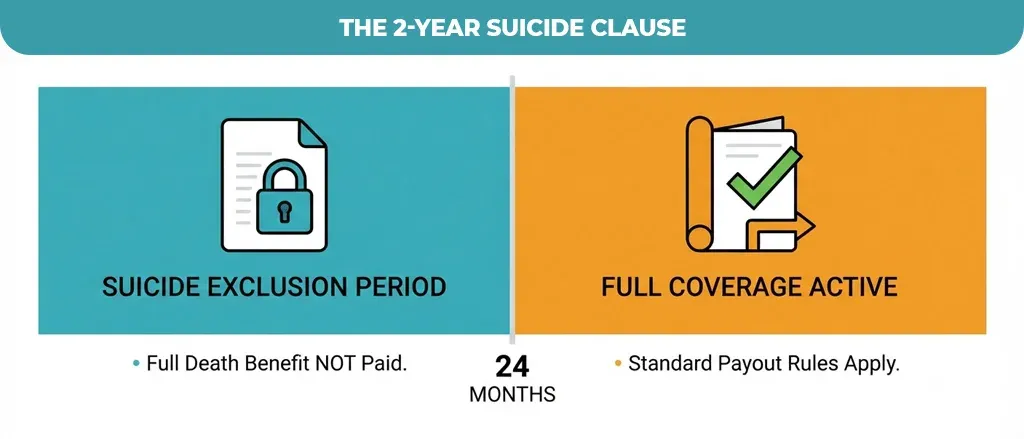
The Standard 2-Year Rule: Most life insurance policies feature a suicide clause stating that the insurer will not pay out the full death benefit if the insured dies by suicide within the first one to two years (typically two years) of the policy’s effective date. This is often called the 2-year suicide exclusion period, and it is one of the most consistent features across nearly all individual life insurance contracts, regardless of carrier.
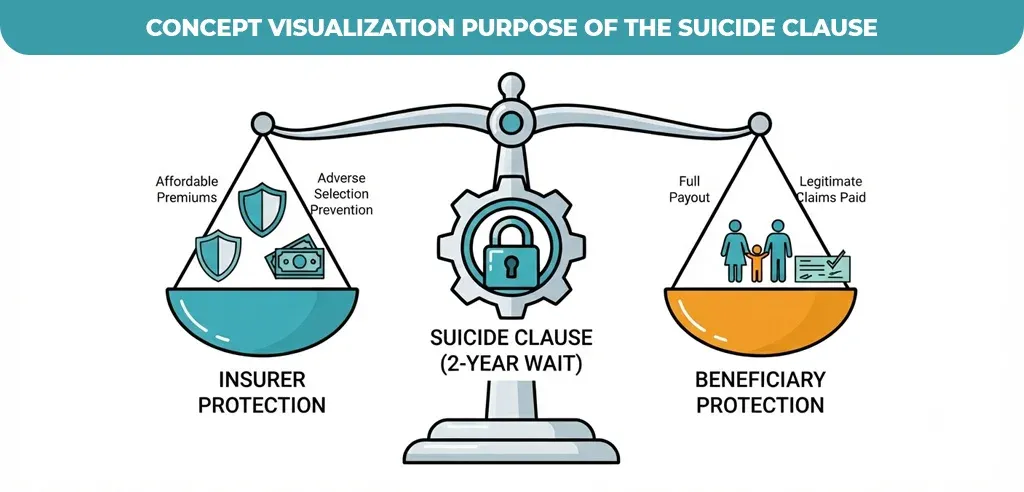
Purpose of the Clause: The clause is designed to prevent adverse selection, specifically, individuals purchasing a policy with the immediate intent of ending their life to secure a financial payout for relatives. By requiring the policy to be active for a defined period before a suicide claim is paid at full value, insurers can keep coverage affordable and available for everyone.
Policy Reinstatement or Switching: It’s important to note that swapping to a new policy or reinstating a lapsed one typically resets this 2-year clock. If a policyholder lets coverage lapse and later reinstates it, or replaces an old policy with a new contract, the suicide exclusion period generally begins again from the reinstatement or new-issue date, not from the original purchase date.
Industry practices around the suicide clause and related contestability windows are broadly consistent across carriers and are tracked by regulatory bodies such as the National Association of Insurance Commissioners (NAIC). It keeps an eye on standard policy provisions to assist in guaranteeing that consumers are treated fairly across the country.
What Happens to the Payout During the Exclusion Period?
No Full Death Benefit: If a suicide occurs within the active exclusion window, beneficiaries generally do not receive the face value amount of the policy. This is often the most difficult part of the process for grieving families to understand, especially if premiums were being paid faithfully at the time of death.
Return of Premium (ROP): Rather than denying the claim outright, insurers will typically refund all baseline premiums paid into the policy up to that point back to the designated beneficiaries, minus any outstanding loans. This return of premium life insurance provision ensures that families are not left completely empty-handed, even though the full death benefit is not payable during this window.
Proof and Investigation: Insurance providers will conduct a thorough claims investigation and require an official death certificate and coroner’s report before issuing a refund or benefit. This process protects the integrity of the claim and ensures the correct amount is paid to the correct beneficiaries.
Documents Typically Required for a Claim Investigation:
- Certified copy of the death certificate.
- Official coroner’s or medical examiner’s report.
- Completed claimant’s statement and policy documents.
While this documentation requirement can feel intrusive during a period of grief, it is a standard part of how life insurance handles suicide claims industry-wide, and most insurers assign a dedicated claims representative to guide beneficiaries through each step.
Coverage After the Suicide Clause Expires
Full Death Benefit Activation: Once the policy’s suicide exclusion period (usually 24 months) passes, the clause expires and no longer applies to the contract.
Standard Payout Rules: If the policyholder dies by suicide after this window has lapsed, the insurer treats it like any other covered cause of death, paying the full tax-free death benefit to the beneficiaries. At this stage, cause of death no longer affects eligibility for payout, the same way it wouldn’t for a death from illness or accident.
Separating Contestability vs. Suicide: It’s worth clarifying that while the contestability period also typically lasts two years, it serves a different purpose, allowing insurers to investigate application misrepresentation, such as undisclosed health conditions. The suicide clause specifically governs the cause-of-death timeline, and while the two periods often run concurrently, they are legally distinct provisions within the policy.
This distinction matters because a policy can be fully incontestable and still have separate suicide-clause language, and understanding both helps beneficiaries know exactly what to expect when filing a claim.
Group Life Insurance vs. Individual Policies
Group Plan Variations: Life insurance provided through an employer (group term life) also usually features a suicide provision, commonly lasting one or two years from the enrollment date or the effective date of increased coverage. Because group policies are often issued with limited or no medical underwriting, carriers rely on this clause as a similar safeguard against adverse selection.
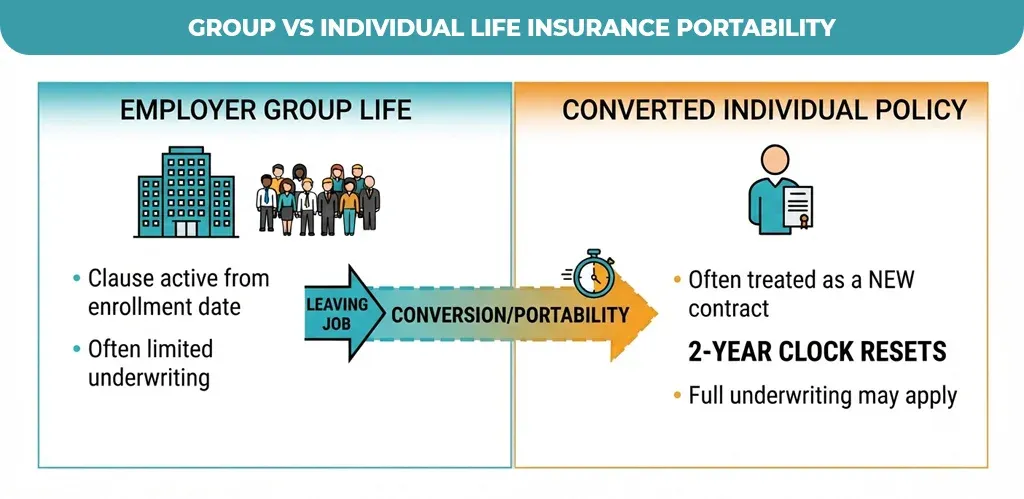
Portability and Conversion: Converting a group policy to an individual policy, for example, after leaving an employer, can impact or restart the active clause, since the new individual contract may be treated as a fresh policy with its own effective date.
General guidelines from the Employee Retirement Income Security Act (ERISA) establish the broader framework that governs how employer-sponsored group benefits, including life insurance, are administered and disclosed to plan participants, though the specific suicide-clause language still comes from the insurance carrier’s policy contract.
Conclusion
While navigating life insurance rules around suicide can feel sensitive and complex, understanding the 2-year suicide clause provides clarity. Policies do cover suicide, but standard industry safeguards require the policy to have been active beyond the initial exclusion window for the full death benefit to pay out; otherwise, a full refund of premiums is provided to beneficiaries.
Whether you’re a policyholder planning ahead or a beneficiary trying to understand your options after a loss, knowing how these provisions work can replace uncertainty with a clear path forward.
Navigating life insurance options and finding the right policy to protect your family’s financial future doesn’t have to be overwhelming. At Premier Services Agency, our experienced professionals are here to provide compassionate, transparent guidance and help you secure a policy tailored to your unique needs. Contact Premier Services Agency today to speak with a licensed expert and explore your coverage options.