

Types of Cremation Options
Not all cremation services look the same. The right choice depends on how much ceremony your family wants, your timeline, and your budget.
Direct Cremation
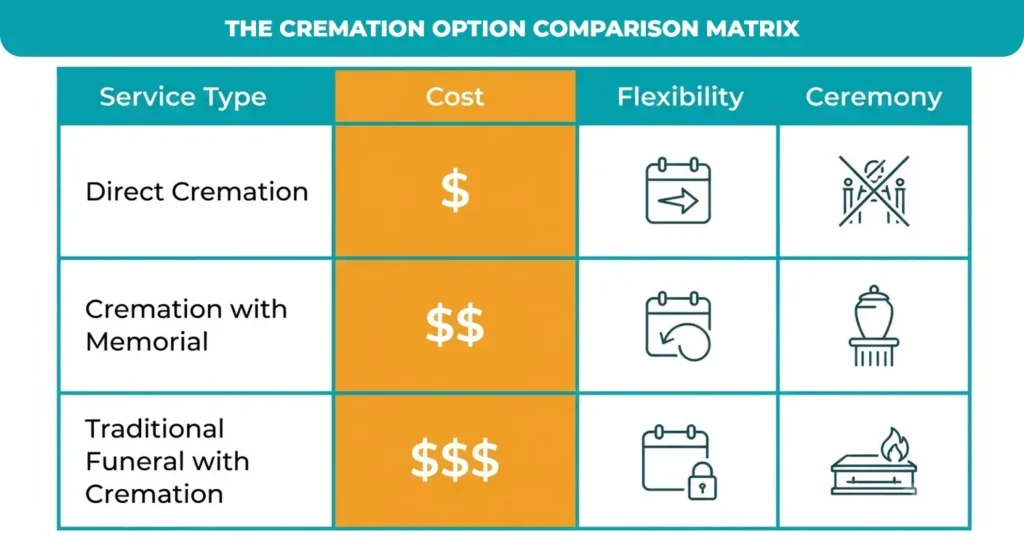
Direct cremation is the most streamlined and cost-effective option: there’s no viewing, visitation, or ceremony beforehand. The body is transported, authorized, and cremated, and the remains are returned to the family, who can then hold a memorial whenever and wherever they choose, or forgo one entirely.
Cremation with Memorial Service
In this option, cremation happens first, and a memorial service follows on a separate day, often with the urn present. This separates the logistics of cremation from the emotional work of gathering to remember the person, giving families more scheduling flexibility.
Traditional Funeral with Cremation
This is the most full-service option: a viewing or visitation, a formal funeral ceremony with the body present, and cremation afterward. Families who want the traditional funeral experience but prefer cremation over burial for the final disposition typically choose this path.
Comparing Your Options
| Option | Typical Time | Typical Cost | Flexibility |
| Direct Cremation | 1–2 weeks to receive remains | $1,000–$3,000 | Lowest cost; the memorial can be planned separately, at any time |
| Cremation with Memorial Service | 2–4 weeks (service scheduled after cremation) | $2,000–$5,000 | Moderate; service date isn’t tied to cremation timing |
| Traditional Funeral with Cremation | 3–7 days before cremation | $4,000–$9,000+ | Lowest flexibility; full ceremony precedes cremation |
Navigating Costs and Budgeting
Average Cost Breakdown
Cremation service costs vary by provider and region, but most price breakdowns include the following line items:
| Expense | Typical Range |
| Crematory / cremation fee | $300–$1,200 |
| Funeral home basic services fee | $500–$2,500 |
| Transportation of remains | $200–$700 |
| Death certificates & permits | $10–$25 per certified copy |
| Urn or scattering container | $50–$800+ |
| Optional memorial service | $500–$3,000+ |
Factors That Affect Price
- Geographic location: Urban markets and states with a high cost of living tend to run higher, so cremation services in Los Angeles will typically cost more than in a small rural town.
- Provider type: Dedicated cremation providers are often less expensive than full-service funeral homes, offering cremation as an add-on.
- Complexity of the memorial: A larger venue, catering, printed materials, or live-streamed services add cost on top of the cremation fee itself.
Budgeting Tips
Prepaid cremation plans let you lock in today’s pricing and outline your wishes in advance, which removes financial guesswork from your family during an already difficult time. Immediate-need financing, such as short-term payment plans offered directly by funeral homes, or family contributions, is the more common route when arrangements weren’t planned ahead. Comparing itemized quotes from at least two or three affordable cremation services in your area is one of the simplest ways to control cost.
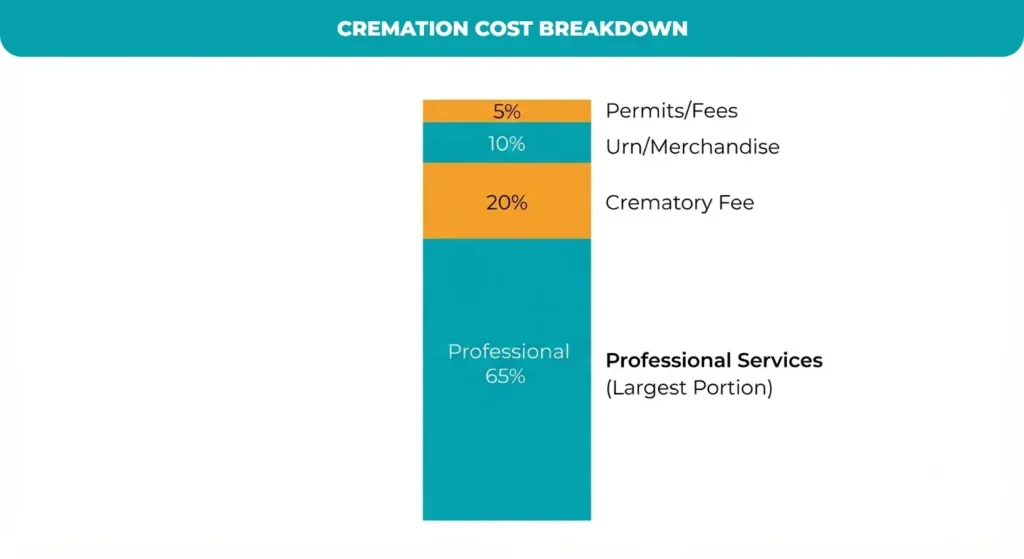
Summary: Professional service fees (transportation, staff labor, permits) typically make up the bulk of a cremation bill, while merchandise like urns is the more controllable, optional expense.
Legal and Administrative Requirements
Death Certificates and Permits
Before cremation can proceed, several documents must be filed with state or local authorities. Most families will need:
- A certified death certificate, signed by the attending physician or medical examiner
- A burial-transit or cremation permit issued by the local vital records office
- A completed cremation authorization form signed by the legal next of kin
- Any pre-need contract or advance directive on file, if one exists
- Additional certified copies of the death certificate for banks, insurers, and Social Security (most families order 5–10 copies)
Who Can Authorize Cremation
State law determines the priority order of who may legally authorize cremation, typically a surviving spouse, followed by adult children, then parents, then siblings, unless the deceased named a specific authorizing agent in a written directive. When a family is divided on the decision, the funeral home is legally required to follow the person with the highest statutory priority.
Choosing Memorialization and Urns
Urn Selection
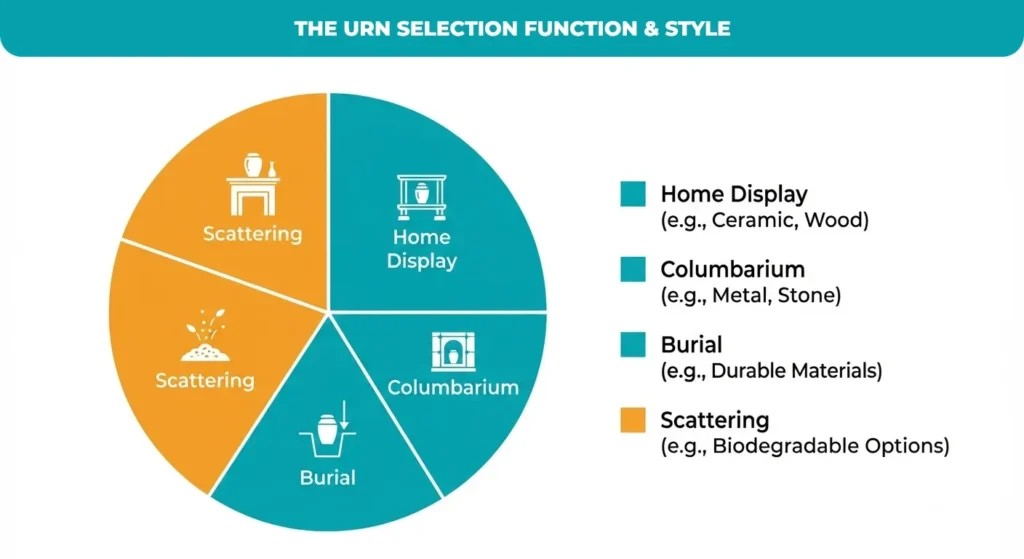
Urns are available in a range of materials, each suited to different purposes:
- Metal (bronze, steel, pewter): Durable, often chosen for columbarium niches or long-term home display
- Wood: Warm, traditional look for home display or burial
- Ceramic: Decorative option well-suited for home display
- Biodegradable (salt, sand, paper, bamboo): Designed specifically for water or ground burial, dissolving naturally over time
Scattering Options
Scattering ashes is legal in most places, but rules vary. Public land often requires agency permission, many states regulate scattering in public waterways, and some private cemeteries offer dedicated scattering gardens. Always check local and state regulations, and consider notifying the property owner or agency in writing beforehand.
Keepsakes
Many families choose to divide remains, keeping a small portion in keepsake jewelry, a mini urn, or a small decorative container while placing the majority in a columbarium, cemetery plot, or scattering location. This lets multiple family members hold a physical connection to their loved one.
Conclusion
Ultimately, navigating cremation services requires a blend of foresight, informed decision-making, and trusted professional guidance to ensure your final wishes are executed with total peace of mind. By securing an itemized quote, verifying provider accreditation, and clearly documenting your preferences in advance, you transform an inherently emotional and complex challenge into a seamless, manageable experience that honors your legacy with dignity and grace.
As you move forward, remember that taking control of these arrangements is the ultimate act of care for yourself and your loved ones, sparing them from unnecessary financial strain or uncertainty during an already difficult time. With the right plan in place, you gain the invaluable freedom to focus on what truly matters: celebrating a life well-lived and creating a meaningful, lasting memorial that authentically reflects your unique journey.