

Saying goodbye to a loved one is never easy. But more families today are choosing a celebration of life over a traditional funeral a gathering that leans into joyful memories instead of somber mourning. A celebration of life is a personalized tribute that honors a person’s passions, achievements, and one-of-a-kind personality, giving friends and family a warm, meaningful way to say farewell.
Still, planning an event that balances heartfelt emotion with genuine celebration can feel overwhelming, especially in the middle of grief. This guide walks you through exactly what a celebration of life is, how it differs from a funeral, and how to plan one step by step, from choosing a venue and wording your invitations to selecting music, quotes, and meaningful rituals that reflect a life well lived.
What Is a Celebration of Life? Understanding the Modern Memorial
So, what is a celebration of life, exactly? Unlike a traditional funeral, which often follows a formal, somber structure, a celebration of life is an event designed around remembrance, gratitude, and joy. It’s less about mourning a death and more about honoring the way someone lived.
Modern end-of-life planning has shifted noticeably toward this kind of personalized storytelling. Families are moving away from rigid religious or cultural scripts and toward gatherings that feel authentic to the person being remembered. Industry data from the National Funeral Directors Association (NFDA) points to a steady rise in cremation rates nationwide, and cremation often gives families more flexibility to plan a personalized memorial gathering on their own timeline rather than within the tight window a traditional burial requires.
Celebration of Life vs. Funeral: What’s the Difference?
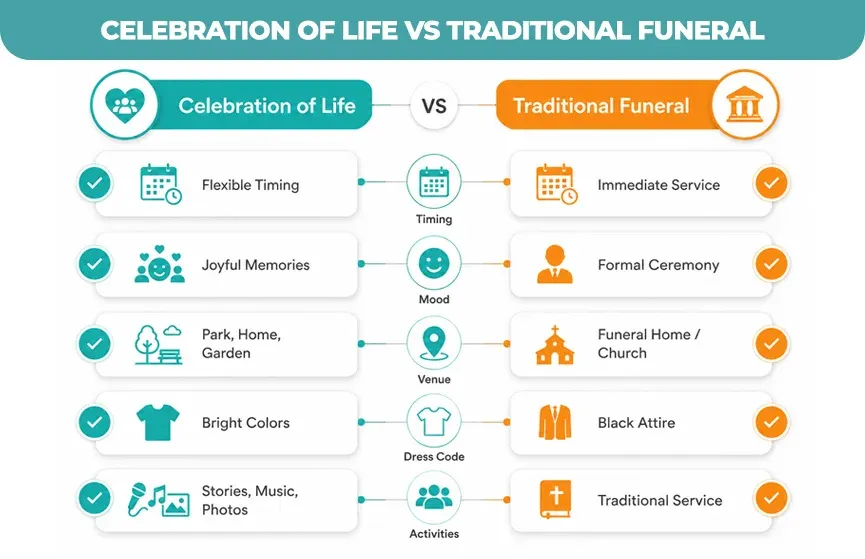
The celebration of life vs funeral question comes up often, and the distinctions matter when you’re deciding how to honor someone:
- Timing: Funerals typically happen within days of a death. A celebration of life is often held weeks or even months later, giving out-of-town family and friends time to travel and prepare.
- Tone: Funerals tend to be formal and reflective. Celebrations of life lean upbeat, with music, storytelling, and shared laughter alongside tears.
- Setting: Funerals are usually held in funeral homes, churches, or cemeteries. Celebrations of life can happen almost anywhere: a favorite park, a family backyard, a restaurant, or a community hall.
- Attire: Traditional black mourning attire isn’t required. Many hosts encourage bright colors or a theme that reflects the person’s personality.
Neither approach is “better”; many families choose to hold both a funeral and a celebration of life, using the funeral for immediate rites and the celebration as a later, more personal tribute.
Step-by-Step Guide: How to Plan a Celebration of Life
Learning how to plan a celebration of life is easier when you break it into manageable steps. Use this checklist to keep logistics organized so your family can stay focused on connection, not stress.
Set the Tone and Choose a Venue
Start by choosing a location that reflects who your loved one was. A few ideas to consider:
- A favorite park or garden for someone who loved the outdoors
- A community center or event hall for larger gatherings
- The family home for an intimate, personal setting
- A restaurant, brewery, or venue tied to a beloved hobby or tradition
If you’re planning an outdoor event, always build in a weather contingency plan or backup indoor space.
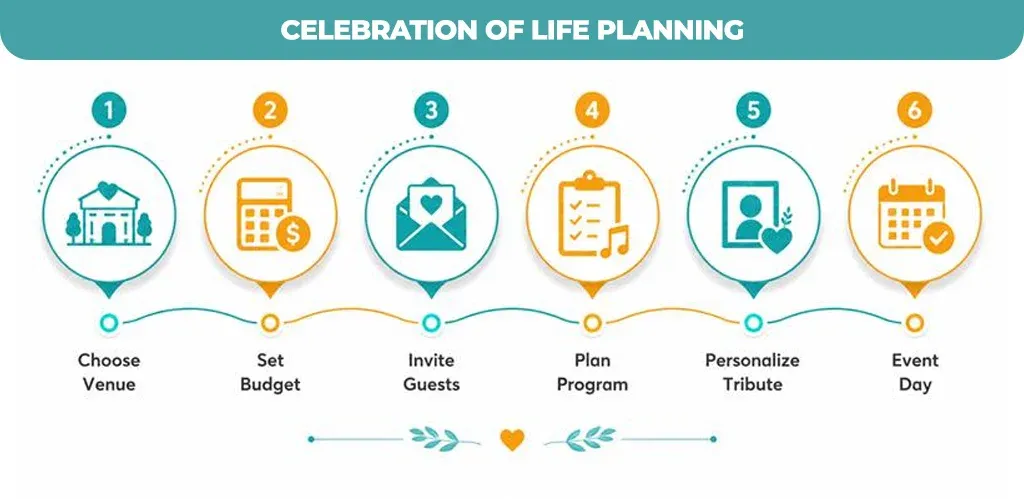
Budget and Guest List
Estimate your guest count early, since it drives nearly every other decision: venue size, catering quantities, and seating. Set a realistic budget that covers the venue, food, printed materials, and any keepsakes you plan to hand out.
Celebration of Life Invitations: Wording and Etiquette
Celebration of life invitations should clearly set expectations so guests understand the tone of the event. Since this differs from a traditional funeral announcement, it helps to specify:
- The celebratory nature of the gathering (not a somber service)
- Any requested celebration of life dress code, such as “wear your brightest colors” or “favorite team jersey encouraged”
- Whether the event is open to all who knew the person, or more intimate
- RSVP details, especially if catering numbers depend on it
A simple celebration of life invite might read: “Join us as we celebrate [Name]’s extraordinary life. Come ready to share stories, laughter, and love. Bright colors welcome; formal attire not required.”
Build the Celebration of Life Program
A celebration of life program keeps the event flowing and gives guests a keepsake to take home. A typical program includes:
- Opening welcome and a few opening words for celebration of life from a host or family member
- A brief biography or timeline of milestones
- Open-mic story sharing or planned speakers
- A music segment or dedicated celebration of life songs
- A closing ritual, toast, or group activity
- Light refreshments or a shared meal to close the gathering
Coordinate speakers, playlists, and a master of ceremonies in advance so the day runs smoothly and no one is scrambling for a microphone.
Creative Ideas to Personalize the Tribute
The best celebration of life ideas come directly from the person’s own passions, hobbies, and milestones. Here are ways to bring their story to life.
Memory Displays and Photo Tributes
- An interactive memory board where guests write notes or memories
- A looping video montage of photos set to their favorite songs
- A “bucket list” or milestone station highlighting major life achievements
Symbolic Rituals
- A butterfly or balloon release as a closing moment
- Planting a memorial tree or garden guests can visit in future years
- An open-mic story-sharing segment where anyone can speak
Grief support professionals note that active participation speaking, planting, releasing, creating tends to help attendees process loss and find closure more than passive observation alone.
Custom Keepsakes and Favors
- Custom bookmarks printed with a favorite quote or photo
- Packets of wildflower seeds guests can plant at home
- Custom pins, magnets, or small tokens tied to a hobby
Choosing Celebration of Life Songs
Music sets the emotional pace of the event. Many families build a playlist around the person’s favorite artists or eras, saving one or two especially meaningful celebration of life songs for key moments: the opening, the closing ritual, or a tribute video.
Practical Checklist for Day-Of Coordination
Even a beautifully planned celebration needs someone managing the details on the actual day. Assign these roles ahead of time so family members can focus on connecting with guests, not troubleshooting.
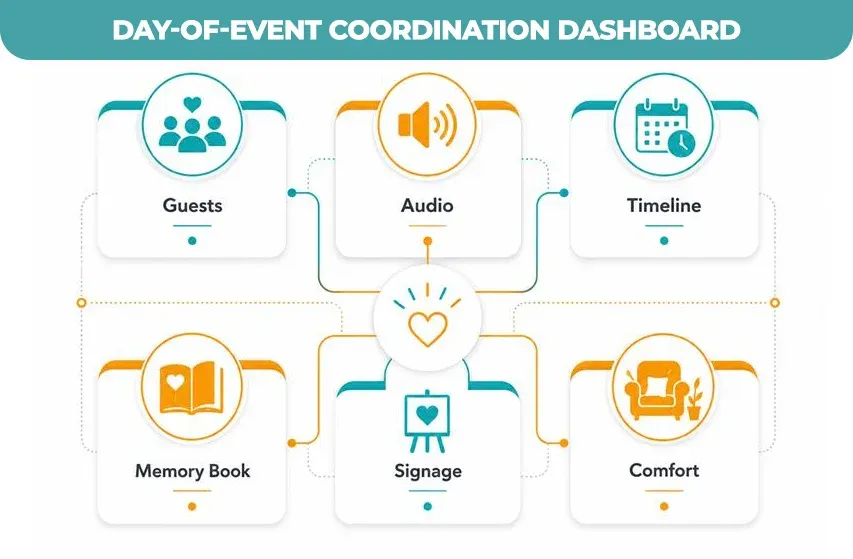
- Greeters to welcome guests and direct them to seating or the guest book
- An audiovisual coordinator to manage music, slideshows, and microphones
- A guest book or memory-card attendant
- A running timeline so speakers, meals, and rituals stay on schedule
- Clear signage for parking, restrooms, and accessibility needs
- Extra seating and shade or shelter for elderly guests, plus a weather backup plan for outdoor events
What to Wear to a Celebration of Life
Guests often wonder what to wear to a celebration of life, especially since it breaks from traditional funeral norms. If the invitation specifies a celebration of life attire theme like favorite colors, a sports team, or Hawaiian shirts, follow that lead. Without specific guidance, business casual in soft or warm tones is a safe, respectful default. When in doubt, it’s always fine to ask the host directly what to wear to celebration of life events they’re hosting.
What to Bring to a Celebration of Life
If you’re attending, consider bringing a card, a favorite photo to add to a memory table, or a short written memory to share. Many hosts also welcome a small dish or dessert if the event includes a potluck-style meal.
Conclusion
Planning a celebration of life is a powerful way to transform grief into a lasting tribute of love, joy, and cherished memory. By focusing on your loved one’s unique spirit, organizing the logistics thoughtfully, and weaving in deeply personal touches from a meaningful celebration of life quote to a favorite song, you can create a healing experience for everyone who attends.
You don’t have to navigate the emotional and logistical complexity of honoring a legacy alone.
Ready to design a seamless, beautifully coordinated tribute? Visit Premier Services Agency today to connect with expert planners and dedicated advisors who can help you bring your vision to life with care and precision.