



Introduction
As people move into their later years, financial planning becomes more critical than ever. One area that is often overlooked is planning for funeral and burial expenses. These costs can rise quickly and place emotional and financial stress on loved ones. Burial insurance for seniors helps families prepare in advance and avoid unexpected financial pressure.
This guide explains how this type of coverage works, who it is designed for, what it costs, and why it is considered a practical solution for end-of-life planning.
What Burial Insurance Is and How It Helps Seniors
Burial insurance is a form of life insurance created to cover funeral, burial, or cremation expenses. It is also commonly known as final expense insurance for seniors or funeral insurance for seniors. These policies focus on affordability and ease of approval rather than large payouts.
Most senior citizen burial insurance plans do not require a medical exam. This makes them accessible to older adults who may have existing health conditions and would otherwise struggle to qualify for traditional life insurance.
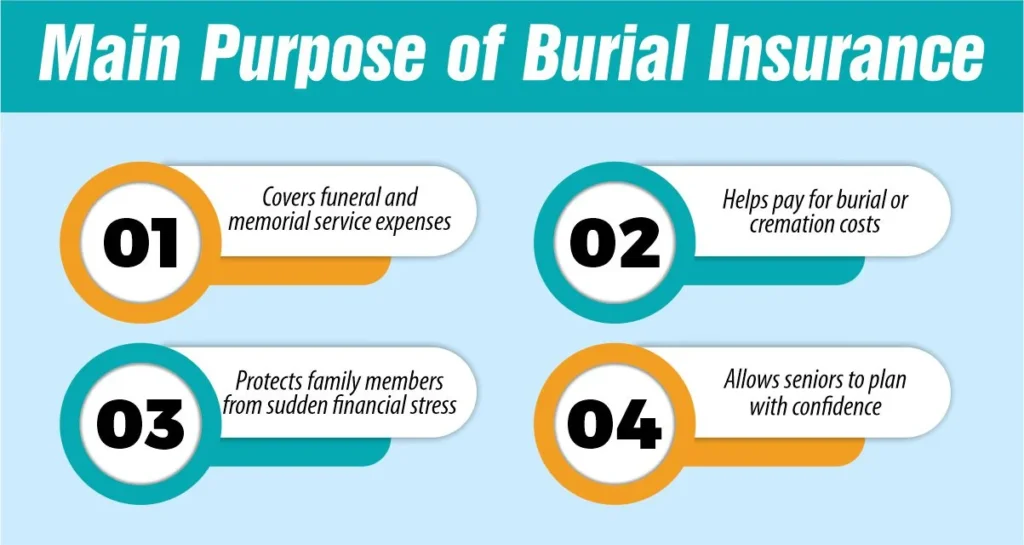
Main Purpose of Burial Insurance
- Covers funeral and memorial service expenses.
- Helps pay for burial or cremation costs.
- Protects family members from sudden financial stress.
- Allows seniors to plan with confidence.
Why Seniors Consider Burial Insurance
Many seniors assume their retirement savings will be enough to handle funeral expenses. In reality, funeral costs can exceed expectations and create pressure for family members. Burial insurance for seniors offers a simple way to prepare for these costs in advance.
Without coverage, families may be forced to make rushed financial decisions during a difficult emotional period. Planning helps reduce stress and uncertainty.
Challenges Families Face Without Coverage
- Unexpected out-of-pocket funeral expenses.
- Emotional stress combined with financial worry.
- Delays in funeral arrangements.
- Financial responsibility is placed on loved ones.
Affordable burial insurance for seniors ensures families can focus on remembrance rather than expenses.
How Burial Insurance Works
This type of insurance works similarly to a basic life insurance policy. The insured senior pays a fixed monthly premium. When the policyholder passes away, the insurance company provides a lump sum payout to the beneficiary.
The beneficiary can use the funds for funeral services, burial or cremation costs, medical bills, or other end-of-life expenses. This flexibility is one of the main reasons final expense insurance for seniors is widely chosen.
Coverage amounts usually range from five thousand to twenty five thousand dollars, depending on the policy.
Types of Burial Insurance Policies Available
There are several policy options available, each designed to meet different needs and health situations.
Simplified Issue Policies
- Require answering basic health questions.
- No medical exam is required.
- Approval is usually quick.
- Premiums are lower compared to guaranteed plans.
Guaranteed Issue Policies
- No health questions are asked.
- Approval is guaranteed within the eligible age range.
- Monthly premiums are higher.
- Benefits may be limited during the first two years.
Prepaid Funeral Plans
- Purchased directly through funeral homes.
- Cover specific funeral services.
- Less flexibility than insurance based options.
Coverage Options for Seniors Over 60
Burial insurance for seniors over 60 is generally easier to obtain and more affordable than policies purchased later in life. Many insurance companies offer simplified issue plans for this age group.
Benefits for Seniors Over 60
- Lower monthly premiums.
- More policy options are available.
- Higher coverage limits are possible.
- Faster approval process.
Burial Insurance for Seniors Over 60 Cost
The burial insurance for seniors over 60 costs typically falls between thirty and seventy dollars per month. Rates vary based on health, age, and coverage amount.
Coverage Options for Seniors Over 70
Burial insurance for seniors over 70 remains accessible, though premiums increase with age. Many individuals in this group choose guaranteed issue policies to avoid medical questions.
What Changes After Age 70
- Monthly premiums increase gradually.
- Coverage amounts may be reduced.
- Waiting periods may apply.
- Approval remains straightforward.
Even with higher premiums, this coverage helps families avoid financial stress.
Coverage Options for Seniors Over 80
Burial insurance for seniors over 80 focuses primarily on guaranteed acceptance. These plans are designed for individuals who may not qualify for other forms of insurance.
Important Considerations for Seniors Over 80
- Higher monthly premiums.
- Smaller coverage amounts.
- Graded benefits in early policy years.
- Coverage focused on funeral expenses only.
At this stage, funeral insurance for seniors offers peace of mind rather than cost savings.
Burial Insurance Cost Overview
Understanding burial insurance for seniors cost helps families plan realistically and avoid surprises.
Average Monthly Premiums by Age
| Age Group | Estimated Monthly Cost | Typical Coverage |
| 60 to 65 | $30 to $50 | $10,000 to $20,000 |
| 70 to 75 | $50 to $80 | $8,000 to $15,000 |
| 80 and above | $80 to $150 | $5,000 to $10,000 |
Actual costs depend on health, location, and insurance provider.
See Burial Insurance Plans That Match Your Budget
Compare monthly costs and coverage options in minutes.
Expenses Burial Insurance Can Cover
This coverage can be used for a wide range of end of life expenses.
Common Covered Costs
- Funeral home services.
- Casket or urn.
- Burial plot or cremation.
- Headstone or memorial marker.
- Transportation and legal paperwork.
This flexibility makes end of life insurance for seniors more practical than prepaid plans.

Key Features Seniors Should Look For
When comparing policies, seniors should focus on the following features.
- No medical exam requirement.
- Fixed monthly premiums.
- Lifetime coverage when premiums are paid.
- Quick payout to beneficiaries.
- Flexible use of funds.
Senior citizen burial insurance is designed for simplicity and reliability.
Burial Insurance Compared With Traditional Life Insurance
Traditional life insurance is designed for income replacement, while burial insurance focuses on covering final expenses.
Comparison Overview
| Feature | Burial Insurance | Traditional Life Insurance |
| Medical Exam | Not required | Usually required |
| Coverage Amount | Lower | Higher |
| Approval Time | Fast | Slower |
| Premium Cost | Moderate | Often expensive |
| Primary Purpose | Funeral expenses | Income protection |
For many seniors, burial insurance is the more accessible option.
How to Choose the Right Burial Insurance Policy
Choosing the right policy requires more than just looking at price. Seniors should focus on coverage suitability, long term affordability, and payout reliability. A well chosen plan protects loved ones without creating financial strain.
Factors to Consider Before Buying
- Monthly premium affordability on a fixed income.
- Coverage amount that realistically matches funeral costs.
- Policy type based on health condition.
- Waiting period or graded benefit rules.
- Reputation and financial strength of the insurance company.
Affordable burial insurance for seniors should balance cost and coverage instead of focusing on the cheapest option.
Understanding Coverage Amounts
Many seniors are unsure how much coverage they actually need. The goal is not to over insure but to cover realistic final expenses.
Typical Expenses to Consider
- Funeral home services and professional fees.
- Burial plot or cremation services.
- Casket, urn, or memorial items.
- Transportation and legal documentation.
- Outstanding medical or personal bills.
Final expense insurance for seniors is designed to handle these specific costs without excess coverage.
Common Mistakes Seniors Should Avoid
Making rushed decisions or focusing only on price can lead to poor outcomes. Being informed helps avoid regret later.
Mistakes to Watch Out For
- Buying coverage without comparing policy types.
- Ignoring waiting period clauses.
- Choosing coverage that exceeds actual needs.
- Not naming or updating beneficiaries.
- Overlooking premium increases with age.
Funeral insurance for seniors works best when chosen carefully and reviewed periodically.
How the Claim and Payout Process Works
One of the most prominent concerns families have is how quickly funds are paid after a loved one passes away. Most policies are designed for fast processing.
Step by Step Claim Process
- The beneficiary notifies the insurance company.
- The death certificate is submitted.
- The claim form is completed and reviewed.
- Funds are released to the beneficiary.
In most cases, payouts are made within a few days to a few weeks. This speed helps families manage funeral arrangements without delay.
Burial Insurance vs Prepaid Funeral Plans
Many seniors compare insurance policies with prepaid funeral arrangements. Each option has advantages and limitations.
Key Differences
| Feature | Burial Insurance | Prepaid Funeral Plan |
| Flexibility | High | Limited |
| Provider Choice | Any funeral home | One funeral home |
| Payout Control | Beneficiary controlled | Provider controlled |
| Inflation Protection | Depends on policy | Usually locked |
| Portability | Can move locations | Often non transferable |
End of life insurance for seniors offers greater flexibility, especially for families who may relocate.
How to Find Affordable Burial Insurance
Affordability does not mean choosing the lowest premium. It means selecting a plan that provides value and long term stability.
Tips to Keep Costs Manageable
- Apply earlier to secure lower premiums.
- Choose simplified issue plans if health allows.
- Avoid unnecessary riders or add ons.
- Compare quotes from multiple providers.
- Review policy details before committing.
Senior citizen burial insurance should fit comfortably within monthly budgets.
When Is the Right Time to Buy Burial Insurance
The best time to buy coverage is before health conditions worsen and premiums increase. Waiting too long can limit options and increase costs.
Ideal Times to Consider Coverage
- After retirement, when income becomes fixed.
- When traditional life insurance is no longer available.
- After paying off significant debts.
- When wanting to reduce financial responsibility on the family.
Burial insurance for seniors over 60 is often more affordable than policies purchased later.
Who Benefits Most From Burial Insurance
This type of coverage is not for everyone, but it is ideal for many seniors.
Burial Insurance Is a Good Fit If You
- Do not have existing life insurance.
- Want to protect children from funeral costs.
- Have limited savings set aside.
- Prefer predictable monthly expenses.
- Want peace of mind about final arrangements.
For many families, this coverage provides emotional and financial relief.
Find the Right Burial Insurance Plan for You
Request your free quote today and protect your family from future expenses.
Final Thoughts
Planning for final expenses is a responsible and caring decision. Burial insurance for seniors helps families avoid financial stress during an emotional time and ensures dignity in final arrangements.
By choosing the right policy, understanding costs, and avoiding common mistakes, seniors can gain peace of mind knowing their loved ones will be protected.
FAQs About Burial Insurance for Seniors
Is burial insurance the same as life insurance?
Burial insurance is a type of life insurance, but it focuses specifically on covering funeral and end of life expenses rather than income replacement.
Can burial insurance be used for expenses other than funerals?
Yes. Beneficiaries can use the payout for medical bills, debts, or other related costs.
Is burial insurance available for seniors with health issues?
Yes. Many policies offer guaranteed acceptance or simplified approval without medical exams.
Does burial insurance expire?
Most policies last for life as long as premiums are paid on time.
Can seniors over 80 still qualify?
Yes. Burial insurance for seniors over 80 is available, though premiums are higher and coverage amounts may be lower.